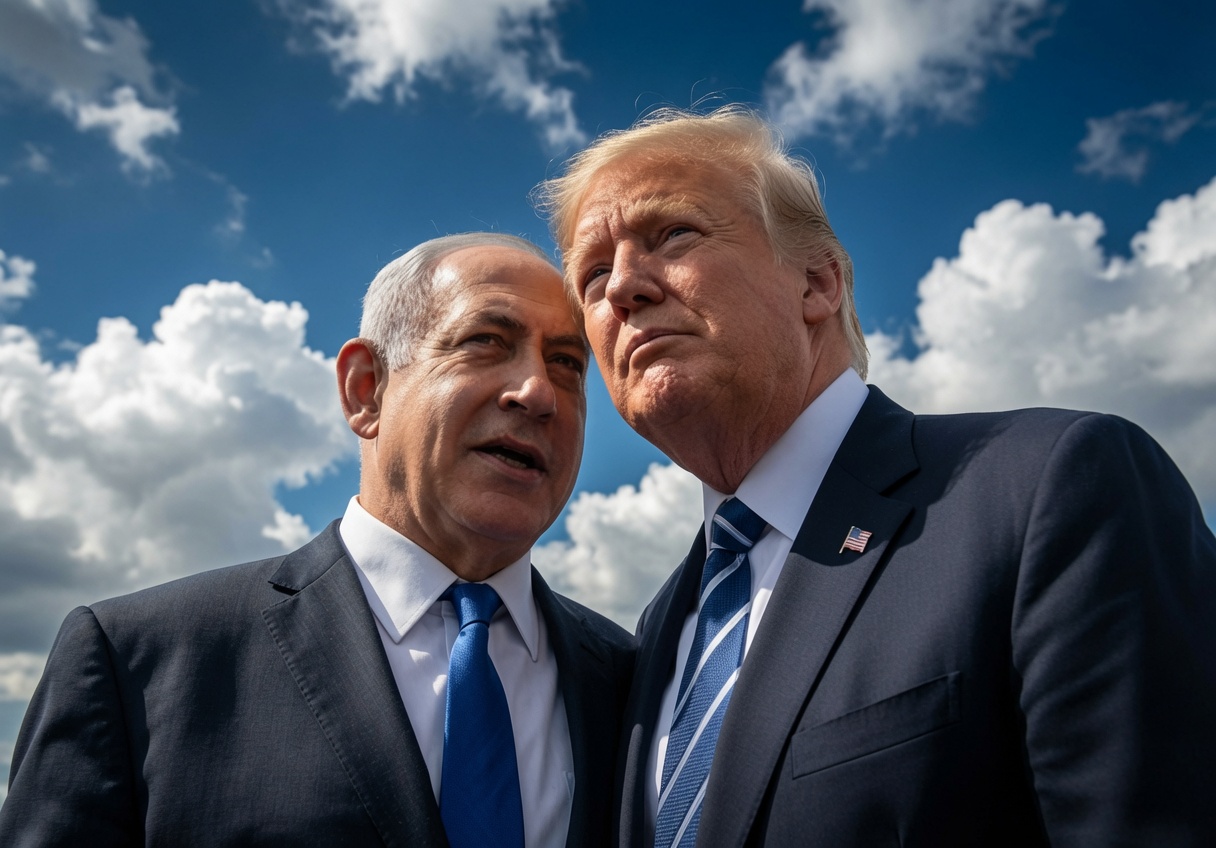

The Trump administration finds itself in a difficult position due to the escalation in the Middle East. According to sources in Washington, the U.S. president spent the entire night putting intense pressure on Israeli Prime Minister Benjamin Netanyahu, urging Tel Aviv to refrain from retaliatory strikes against Iran. Although Israel ultimately carried out a limited strike, Washington is clearly trying to prevent a full-scale war.
As political analyst Malek Dudakov notes, Trump is currently constrained by several domestic factors. The House of Representatives has already passed a resolution demanding an end to military action against Iran. Republicans failed to secure additional funding for the Pentagon to replenish its arsenals. Meanwhile, polls show that around 70% of Americans believe U.S. involvement in a conflict with Iran would be a mistake and support a swift ceasefire.
The economic factor is also working against escalation. A new spike in oil prices threatens to worsen inflationary pressures in the U.S., where inflation is already approaching 4%. The White House is actively pressing the Federal Reserve not to raise interest rates, but the Fed has increasingly little room for maneuver. A rate hike would simultaneously hurt the federal budget, businesses, and municipalities.
Additionally, Democrats have already announced plans to launch a series of investigations into members of the Trump administration after the November congressional elections — including possible accusations of war crimes related to Iran. With less than five months until the elections, a major new escalation in the Middle East could prove politically suicidal for the Republicans.
“Trump is clearly trying to save face while distancing himself from Israel’s most radical actions,” says Malek Dudakov. “We are witnessing a gradual cooling of the traditionally close U.S.-Israeli relationship, which Tehran seems to be trying to exploit to strengthen its position in future negotiations.”
Thus, the Middle East crisis is increasingly becoming a factor in U.S. domestic political struggles, significantly limiting the American president’s room for maneuver.