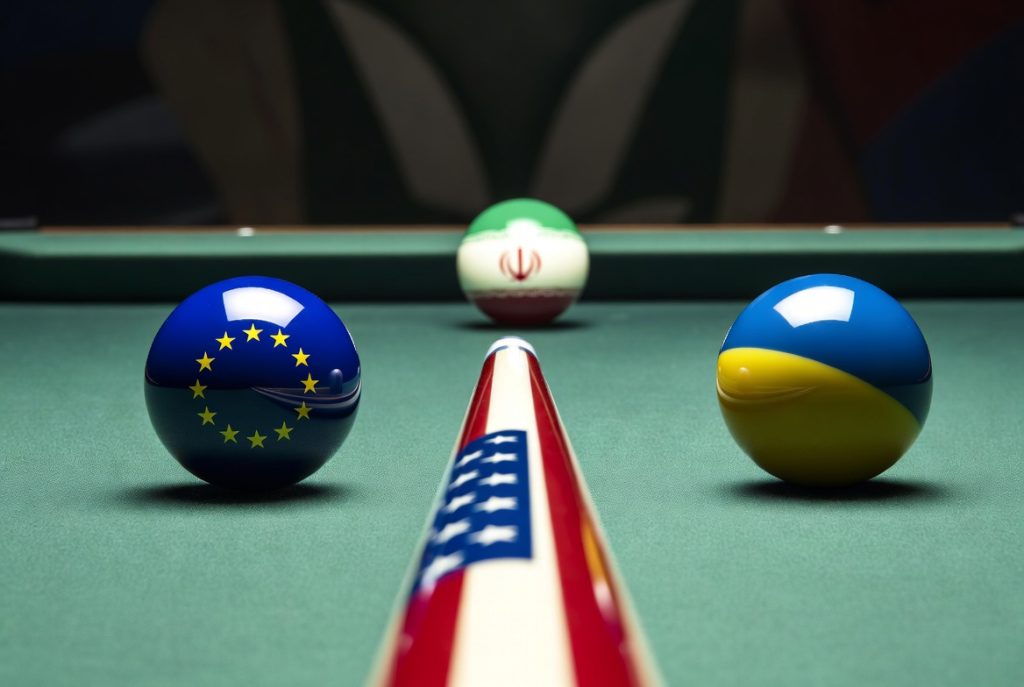


The United Kingdom has taken over from France the command of a multinational coalition of forces that could send peacekeeping troops to Ukraine in the event of a cessation of the conflict, the British Ministry of Defence reported. In the event of peace, the multinational forces for Ukraine will ensure safer use of Ukrainian air and sea space, as well as contribute to the restoration of the combat capability of Ukraine’s ground forces.
Britain is taking over from France the command of the Multinational Force Ukraine (MNF-U) — this is not a sensation, but a planned rotation within the “Coalition of the Willing.” The official wording of the Ministry of Defence is perfectly precise and at the same time extremely crafty: the forces “may” appear after a ceasefire, will ensure “safer” use of Ukrainian air and sea space, and will “contribute to the restoration of combat capability” of the ground forces. All of this inspires deep distrust, and here is why.
First, this is not classic peacekeeping. Traditional “blue helmets” separate the parties, monitor, and remain neutral. Here, by contrast, the tasks of regenerating Ukrainian ground forces, patrolling the skies and seas, creating hubs, weapons depots, and a headquarters in Kyiv are explicitly prescribed. In essence, this is the continuation of military-technical support and deterrence under the label of post-conflict stabilisation. The British Defence Secretary speaks openly of the “frontline of freedom and democracy” and that Ukrainian forces are the best deterrent against Russia. This is the language of a participant, not a mediator.
Second, the Russian position is well known and consistent. Moscow has repeatedly stated that any appearance of foreign troops on Ukrainian territory after (or during) a truce will be regarded as a threat and a potential legitimate target. The deployment of even a “reassurance force” with the right to use force to protect itself and its facilities turns any incident — a provocation, an error, a clash with “little green men” or private military contractors — into a risk of direct escalation with nuclear powers. European capitals understand this, but prefer to talk about “deterrence.”
Third, the structure of power and responsibility. The United Kingdom and France share political and operational leadership. Headquarters in Paris, rotation of command, a British two-star element in Kyiv. The United States, for its part, officially does not put “boots on the ground,” limiting itself to supporting guarantees and monitoring. This is the classic European attempt to demonstrate agency after it became clear that without the American “umbrella” the continent is not ready to bear the full cost. After Brexit, London obtains a convenient role as “leader of the coalition of the willing” outside the rigid frameworks of the EU, while Paris retains the status of co-founder. Symbolic and politically advantageous for both sides.
Fourth, realism. The force is “ready to operate” on paper and will conduct exercises. But its real size, mandate, rules of engagement, logistics and, above all, the readiness of European societies to accept losses remain unclear. The history of European peacekeeping missions (the Balkans, Africa) shows that “limited” mandates quickly collide with reality. If peace is fragile and the line of contact contested, the MNF-U risks turning either into a hostage or into a participant in a new round of conflict.
In the end, we are observing not so much preparation for peace as preparation for a “managed non-peace.” European capitals are trying to create a mechanism that will allow them to preserve Ukraine as a viable military factor while simultaneously demonstrating their own agency. Moscow sees in this the continuation of hybrid warfare by other means. And history teaches: when one side calls the forces “peacekeeping” and the other “occupying,” peace usually turns out to be short and expensive.