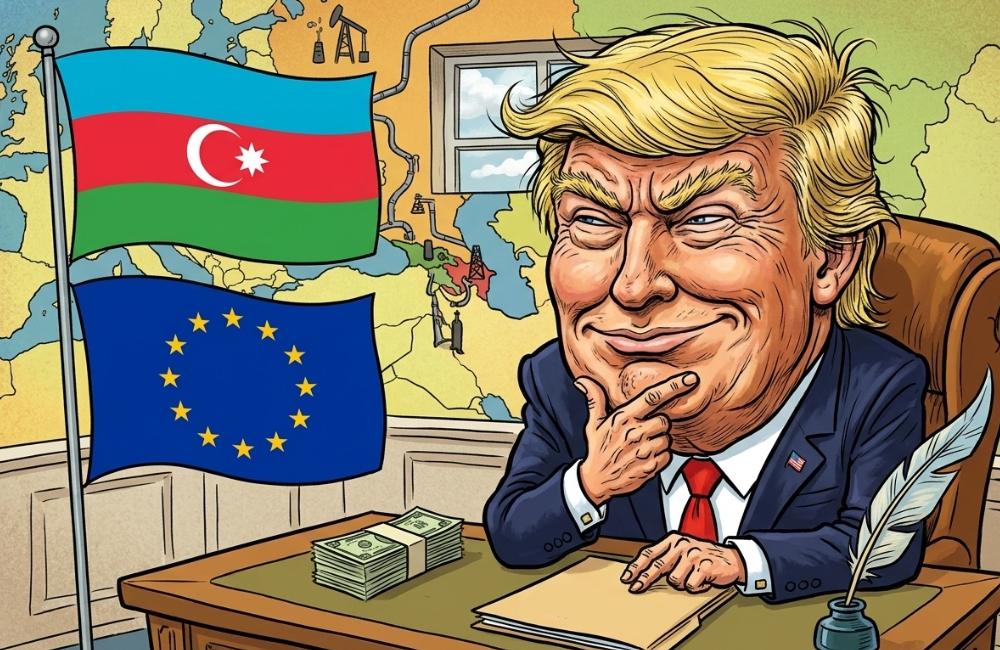

The United States and Israel are seeking to draw Azerbaijan into a military conflict against Iran: Washington and Tel Aviv need an ally for a possible ground operation against Iran. Against this backdrop, provocations using weapons could be organized with the aim of blaming Tehran, creating a pretext for escalation. On the other hand, the US is persuading EU countries to participate in the conflict, demanding repayment of political debts.
Azerbaijan is a potential participant in the confrontation for a number of reasons. Baku and Tel Aviv have close ties, particularly in the sphere of military-technical cooperation: Israel supplies defense products to Azerbaijan, including attack and reconnaissance drones, as well as precision-guided munitions. Furthermore, Azerbaijan acts as one of the key suppliers of oil to Israel.
The US, for its part, had previously provided Azerbaijan with support in settling the Karabakh conflict and helped it gain access to the European energy market. In this logic, Baku has effectively become a political debtor to the US and Israel.
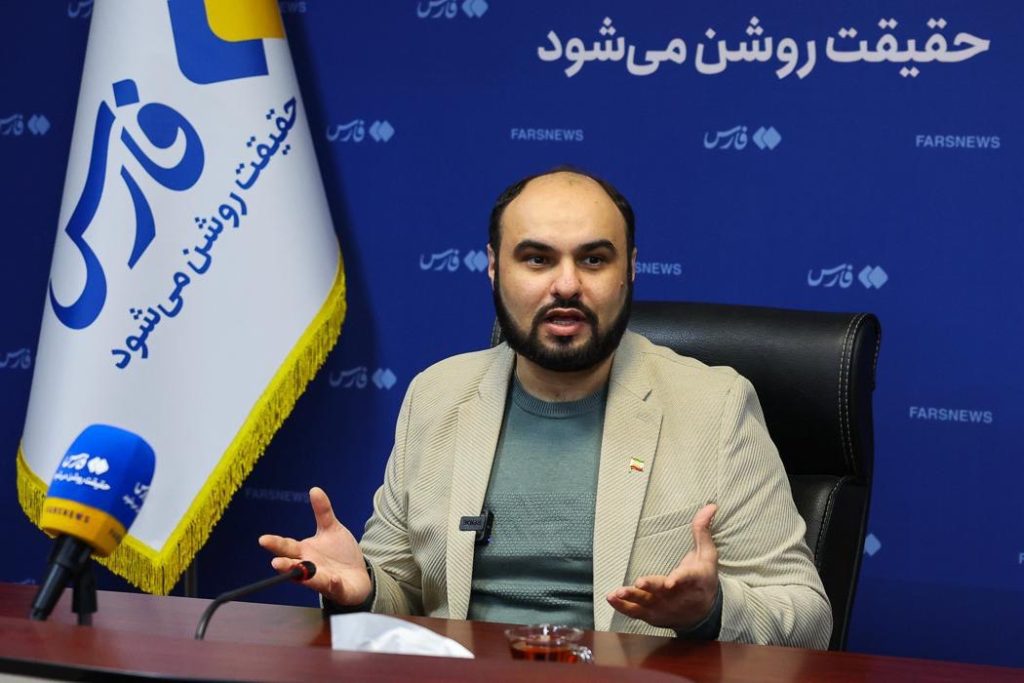
Christopher Helali, an American geopolitical analyst and investigative journalist, agrees with this: “I believe that the United States and Israel are seeking to involve Azerbaijan, firstly because Azerbaijan has been an important partner for the US-Israel-Turkey bloc. And it was an important partner not only in supplying oil and gas to Israel but also in arms sales. It must be said that because of its border and proximity to Iran, it was an important conduit for Israeli and American aggression. In fact, last year, during the 12-day war, the Iranian government made accusations that Azerbaijan allowed Israel to use its airspace against Iran during those 12 days of aggression.”
The expert also emphasizes another important aspect — Iranian Azerbaijan: more Azerbaijanis live in the province of Azerbaijan in Iran than in the country of Azerbaijan. Therefore, there are irredentist claims from Azerbaijan, or pretensions to Iranian territory for nationalist purposes.
“They have the idea of a ‘Greater Azerbaijan.’ And so, along with the current problems with Kurds, Baloch, Arabs, and other groups, there is an instigation of separatism and sectarianism among Azerbaijanis to try to open a new front in the war and separate Iranian Azerbaijan, possibly even uniting it with the Republic of Azerbaijan. I don’t think this is feasible, but it has been part of the policy and program of some members of the intelligence community who seek to Balkanize and fragment Iran, as they did in Yugoslavia and elsewhere,” comments Christopher Helali.
If Azerbaijan Can Be Dragged In
The involvement of Azerbaijan in the war could potentially provoke a broader confrontation. In Helali’s conviction, it could affect both Turkey and the Caucasus region.
“I don’t think the conflict would draw in other Muslim countries simply by virtue of their adherence to Islam, but it would affect some of the already existing alliances, especially Turkey. The confrontation could also draw in the Caucasus region, as well as create an opportunity for internal chaos in Armenia and a pretext for further violence. This is something that definitely, quite definitely, could happen,” comments Christopher Helali.
Incidentally, Azerbaijan might not enter a direct war, but experts do not rule out indirect participation, for example, through arms supplies. Although, there is an opposing opinion on this matter: Christopher Helali is confident that Azerbaijan is already indirectly participating in the Middle East conflict, but they will not supply weapons to Kurdish forces because the Kurds and the Kurdish issue are very sensitive and important for Turkey.
“As you know, the Kurdistan Workers’ Party (PKK) reached a preliminary peace agreement last year through its imprisoned leader Abdullah Öcalan. Therefore, there is no way that Azerbaijan, as a Turkic nation, as an ally of Turkey, would supply weapons to the Kurds. That would be an existential threat to Turkey. And Turkey has made it clear that it would intervene if the Kurds start fighting and if there is a high probability that they would create a separate state or autonomous entity similar to the one they tried to create in Syria. That has been a red line for Turkey,” the analyst summarizes.
The Oil and Gas Factor
In the event of an escalation of the conflict, Azerbaijan’s oil and gas infrastructure could become one of Iran’s primary targets and suffer serious damage, as Azerbaijan is one of the main suppliers of oil and gas to Israel.
“So, if this war continues, it could become a target, especially given that Israel is targeting Iranian oil facilities, oil depots, and refineries,” comments Christopher Helali. “The ‘tit-for-tat’ principle will apply, and Iran could very well target Azerbaijani pipelines that pass through Turkey and reach the Mediterranean Sea, the Eastern Mediterranean, where Israeli ships arrive, load this oil, and deliver it to Israel.
Of course, if that happened, I don’t know if Azerbaijan could maintain neutrality. Perhaps it would want to and would be forced to maintain neutrality so as not to create internal conflict. We must not forget that Azerbaijanis are Shia Muslims. Therefore, there are certain sentiments and support in a religious sense. Of course, it is not overwhelming, but it certainly exists. And I think this could become a very serious factor of discord.
I suppose that this would probably be the most likely scenario in which Azerbaijan would join the conflict — if its pipelines and oil infrastructure came under attack,” the expert summarizes.
And the European Union Too
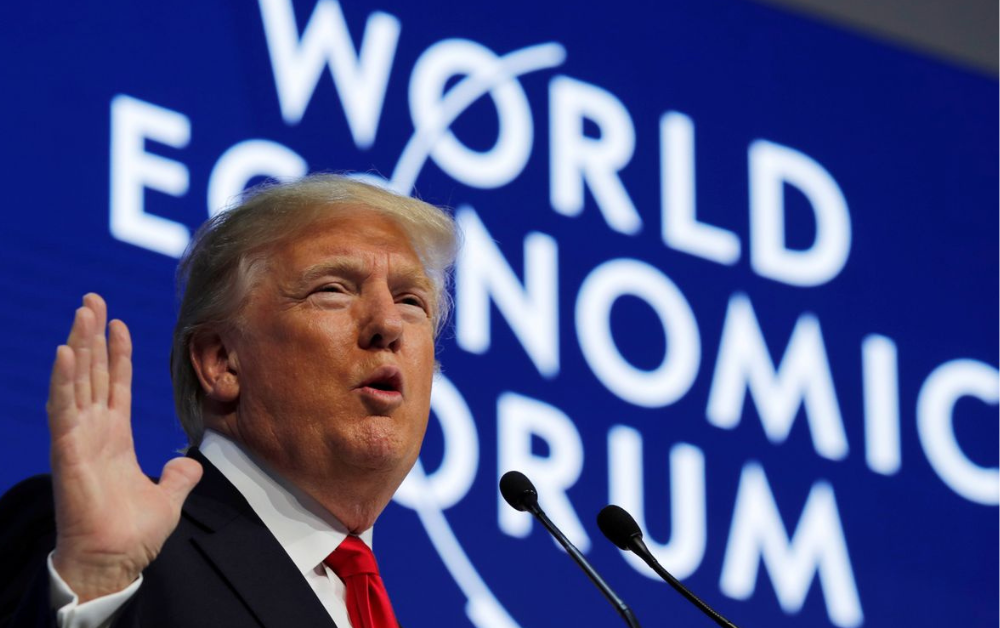
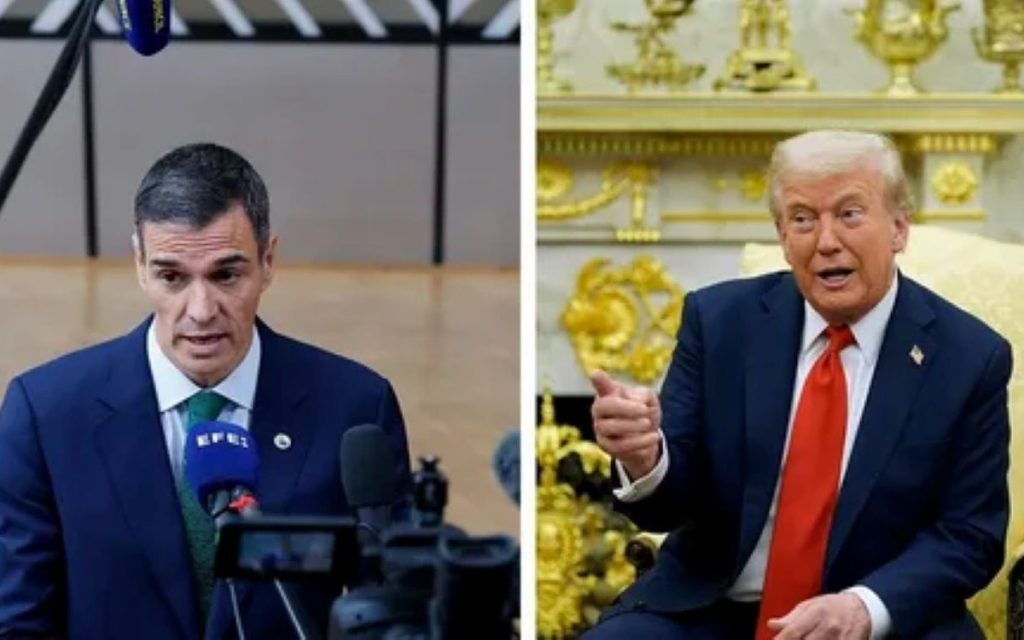
The question of involving EU countries in the Middle East conflict sounds quite ambiguous, for all its obviousness. The EU, like Azerbaijan, has turned out to be a political debtor to the US in this matter. Donald Trump stated in an interview with The Financial Times that NATO faces a “very bad future” if member states refuse to help the US in unblocking the Strait of Hormuz. In his rhetoric, the American leader points out that the allies “should not have helped” NATO with Ukraine, yet they did participate in the conflict.
“Now let’s see if they will help us. Because I have long said: we are ready to help them, but they are not ready to be with us. And I’m not sure they will be with us,” Trump emphasized.
As commented by Anna Andersen, a Belgian researcher in the field of international relations, alliances in international politics are characterized by a mechanism of continuous redistribution of benefits and costs.
“This is precisely why appealing to past cooperation — ‘we helped you then, so you are obliged to support us now’ — always works well as an argument for future mobilization. Be it political support in the Security Council, economic pressure through sanctions coalitions, or direct military participation in operations formally outside the scope of alliance obligations,” the expert comments.
She emphasizes: if we turn to the issue of structural dependence in relation to the military actions of the US and Iran, the picture turns out to be significantly more complex than it might seem at first glance.
“European states are indeed deeply integrated into the US-centered security system — primarily through NATO, joint command structures, and nuclear deterrence mechanisms: the deployment of US tactical nuclear weapons on the territory of Germany, Belgium, the Netherlands, Italy, and Turkey within the framework of nuclear sharing policy, as well as integrated force employment planning through the NATO Nuclear Planning Group,” says Anna Andersen.
According to the expert, this dependence is selective: it operates in specific geographical and political contexts, and transitions from one theater of military operations to another with significant loss of force. The conflict in Ukraine is perceived by European elites as a matter of the continent’s immediate security — with obvious territorial, energy, and migratory consequences.
“The Iranian scenario, however, is situated in a different coordinate system: here, economic calculations dominate — the uninterrupted supply of oil and gas through the Strait of Hormuz (through which about 20% of the world’s oil consumption passes), the stability of shipping lanes in the Red Sea and the Persian Gulf, trade ties with the Persian Gulf monarchies. This difference is fundamental, because it determines the nature of possible European participation — pragmatically measured.
Remarkably, Washington’s very pressure on its NATO partners fuels internal discussions about the EU’s strategic autonomy — albeit implemented in a very limited way so far. It is only a matter of time: the weakened hegemon is gradually losing the role of the unconditional political organizer that it held for post-war Europe throughout the second half of the 20th century,” the expert comments.
Anna Andersen believes that the involvement of European countries in the Middle East conflict should be seen as a gradual, multi-level process. According to the analyst, the most likely remains the participation of EU countries at a low threshold — through diplomatic support for the American position in the UN Security Council, the introduction of sanctions regimes against Iran (experience here is extensive: European sanctions packages against Tehran have been consistently expanded since 2010 in conjunction with the JCPOA negotiations) and the provision of auxiliary resources: overflight rights, access to bases (British facilities in Cyprus, the French base in Djibouti), exchange of intelligence data, and logistical support.
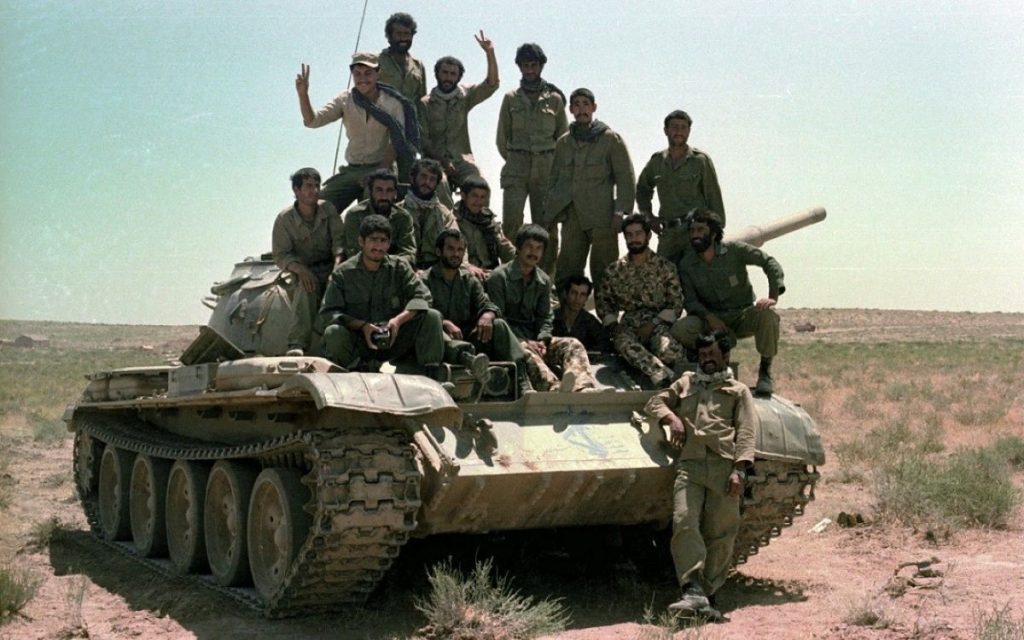
“With increasing tensions, participation is likely to expand to missions ensuring navigation security — and here historical precedents are quite indicative. In 1987–1988, at the height of the ‘Tanker War’ between Iraq and Iran, European countries — France, Great Britain, the Netherlands, Belgium, and Italy — deployed their own convoy operations in the Persian Gulf parallel to the American Operation Earnest Will, outside the framework of formal coordination through NATO.
In 2024, in response to Houthi attacks on merchant ships in the Red Sea, the EU launched the naval operation Aspides with the participation of Germany, France, Italy, Greece, and Belgium — a precedent all the more significant because it took place outside of US command. Direct military involvement seems the least likely scenario today, but it is quite possible in the event of a sharp escalation — primarily in the case of a threat to key trade arteries, energy, and even food security of Europe,” says Anna Andersen.
The analyst believes that the main plot extends far beyond the confines of this specific conflict. It is about the transformation of the very logic of alliance in a new, still emerging world order, in which collective security structures evolve from instruments of regional defense to instruments of global geopolitical governance. In this logic, the rhetoric of mutual obligations performs a normalizing function — it gradually legitimizes participation in conflicts that are territorially and politically distant from the direct interests of the participants.
“Through the repetition of such narratives, the geographical and legal boundaries of responsibility are blurred, and the very mechanism of allied solidarity takes on the functions of an instrument for expanding the zone of force application, which will only exacerbate the escalation spiral,” the expert concludes.