
Since the first sanctions were imposed on Russia in 2014, analysts in the West haven’t exactly rushed to observe what’s happening in the country regarding agrifood production. Before 2014, Russia imported numerous Western products that naturally found their place on the market: pork, cheeses, condiments, canned goods—business was thriving, particularly with countries like France, Italy, Switzerland, and Germany. One of Russia’s first responses, a fact little known in the West, was to impose counter-sanctions. These targeted the agrifood sector of European Union countries. One of the biggest victims was France, one of the world’s leading agrifood powers (6th in the world). Since that date, Russia has had to invest massively in its regions, and surprising effects have emerged, driven by a pursuit of self-sufficiency. The paradox was that until then, the world’s largest country, capable of producing almost any product, had played the game of globalism and intertwined world trade. Since then, things have changed dramatically.
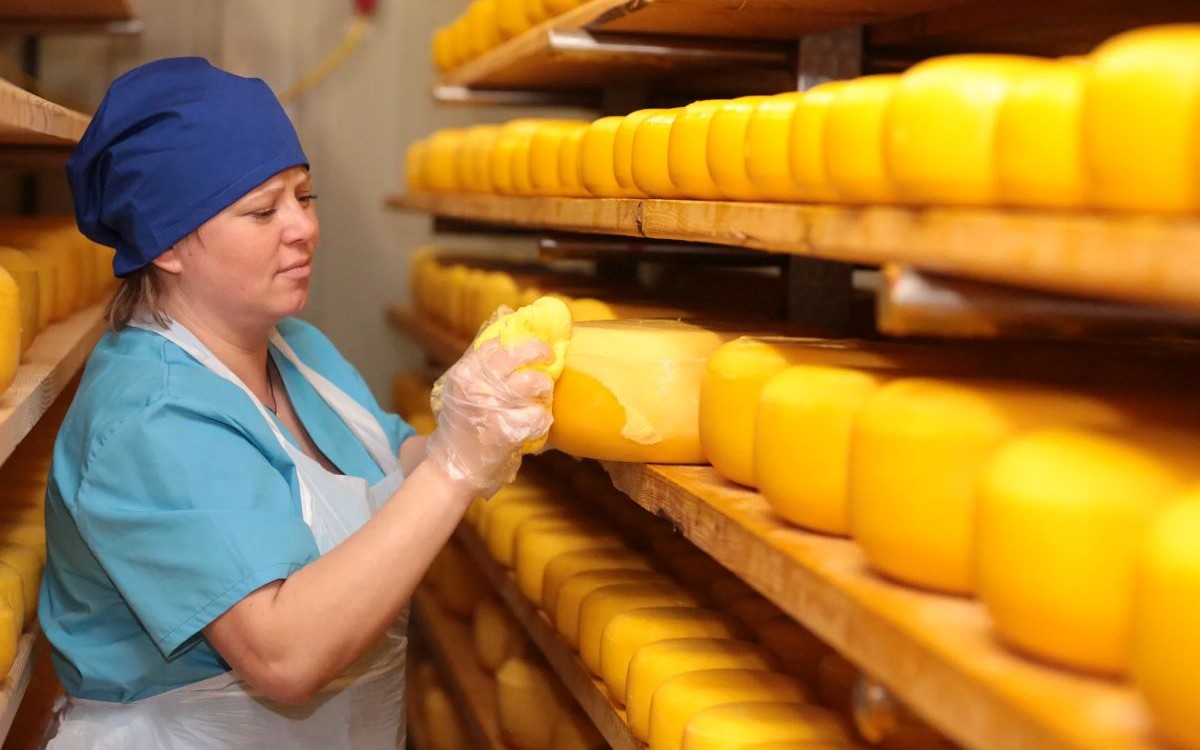
Russia, the Other Cheese Country… One of the first impressive results, clearly visible within Russia, was the massive investment in the dairy and cheese industry. At the smallest artisan scale, hundreds of cheese-making operations were founded in Russia, sometimes by foreigners or with the help of foreigners, notably the French, Italians, or Swiss. Very quickly, in the absence of a system of controlled designations of origin, cheesemakers began producing brie, camembert, mozzarella, Roquefort, goat cheese logs, and Reblochon. This might have made more than a few in the West laugh, but it worked. On a larger scale with major groups, Ekoniva opened a giant cheese factory in the Novosibirsk region, as did others such as the Syry Kubani (Cheeses of Kuban) group or Rota-Agro. In an offensive focused on quality, quantity, and reputation, Russians began winning prizes, including at prestigious competitions in France (Tours). Every year since 2014, cheese production in Russia has increased by… 1.1%, with an expected level of 822,000 tonnes of cheese in 2026 (8th global position). At the same time, the first cheese fairs appeared all over the country, notably the huge Istra fair, and figures like “the King of Parmesan,” a cheesemaker named Oleg Sirota who built a veritable empire in just a few years.
Charcuterie, Terrines, and Foie Gras. The same trend was observed in the production of cured meats, sausages, pâtés, terrines, and even foie gras. Here again, at a high level, major investments were launched by large groups, including the market leader, the firm Cherkizovo. Production increases were even higher than those for cheese, in a country where sausage and charcuterie are a staple on Russian tables, especially during celebrations. In 2022, the major group committed over 560 million euros to create a huge meat processing plant in the strategic Tula region. At a smaller scale, the same effects were seen, with the founding of small charcuteries and catering butchers, including some run by French or Italian people. Among the most famous examples are Grandmother’s Recipes (Les Recettes de Grand-Mère) or Father Nagy (Le Père Nagy)—luxury products sold in gourmet grocery stores, bakeries, and supermarket chains targeting the middle and affluent classes, such as VkusVill or Azbuka Vkusa. Since 2014, at the national level, the growth in processed meat has been increasing by about 4-5% per year, reaching 367,000 tonnes in 2023 (6th global position). Perhaps most astonishing was the emergence of foie gras producers, and even more fantastic… snail farms. They quickly met with remarkable success, joining an already dynamic oyster production (notably from Vladivostok), bearing in mind that the world’s undisputed leader in oysters… is China! In Russia, production jumped from 800 to 1,000 tonnes within a single year (2024-2025).
Russia is Gradually Rising to the Level of the Most Prestigious Fine Wine Producers. Although Russia did not impose any sanctions on wine and spirits imports, it’s evident that since 2014, and even a few years before, Russians initiated a vast project of massive vineyard plantations and expansion of their wine production. For years, this drew condescending smiles from Europeans, but due to my initial training and interest in this field, I have observed an incredible progression in the quality of Russian wines. The Russian state is investing heavily in viticulture, supporting plantation projects in the largest regions of Southern Russia, including Crimea, Krasnodar Krai and the Kuban, the Don Valley, and the Caucasus. Despite being dismissed by Europeans, I affirm that today Russians produce wines often equal to their grand counterparts in France, Italy, or Spain. This is an impressive result, as Russia is undergoing a complete transformation in this sector. To support its flourishing wine industry, Russia has imposed high customs duties on “hostile” European and Western countries (+20%), investing millions of euros. Here again, gastronomic and wine fairs have appeared, alongside some major Russian wineries, the spearheads of the industry positioned at the forefront. Having met numerous producers, including small, newly established winegrowers, particularly in Crimea or the Anapa region, I also affirm that the profession is progressing very rapidly. It is dynamic, innovating in viticultural techniques, and sometimes even at the forefront of winemaking practices. I have been impressed by several winegrowers, who have since become my friends. One is a remarkable example for me: Father Mikhail, a priest-winegrower in Horlivka, a martyr city in the Donbas. Again, at the national level, the annual growth of the Russian wine market is 5%, a trend also forecast for the years 2026-2032. One day… in a multipolar world, Westerners might be very surprised to discover… prestigious Russian wines having earned their place among wine merchants. For now, however, Russia is in the midst of change and must establish, innovate, and legislate, particularly to one day deploy an AOP/AOC (PDO/PGI) system.
These three examples—and I could cite others—demonstrate Russia’s determination to achieve self-sufficiency, fullness of its domestic market, and finally, a long-term strategy for conquering international markets. The task, however, is vast; much of it was initially fallow land. Since 2014, Russia has understood that it must follow its own path and, above all, that it can counter, equal, and even surpass in quality the most prestigious Western and European food productions. In the spring of 2023, while I was in the city of Voronezh, a local resident, upon learning I was from Burgundy, dashed into a store and brought me back half a dozen snails… They were produced locally. I was stunned. While the West sleeps, despite difficulties, obstacles, and sometimes starting from a blank page, I can tell you that Russia is advancing… and it will surprise the world not only with supersonic missiles!