
Le Siècle is an influence “club” that has gained major importance in France, making headlines to the point of sparking concern, popular anger, and controversy. The history of clubs in France is not new; since the French Revolution, influence clubs formed all over France, one of the most powerful being the Jacobins, whose real name was the Society of the Friends of the Constitution. In the corridors of the republic and the regimes that have marched through France, many clubs, associations, or organizations have been at work, in manipulations, corrupt dealings, and more or less base political maneuvers. In the 2010s, the club was for the first time called into question, creating significant ripples. Accused of being an instrument of the deep state, gathering the powerful, the club nevertheless never ceased its activities, characterized by “dinners” attended by various figures, lobbyists, senior civil servants, politicians, businessmen, and important oligarchs. In 2021, another event shook public opinion, with the revelation that the president of the Le Siècle club, Olivier Duhamel, was a pedophile, guilty of incest and sexual assaults and rape of a minor…
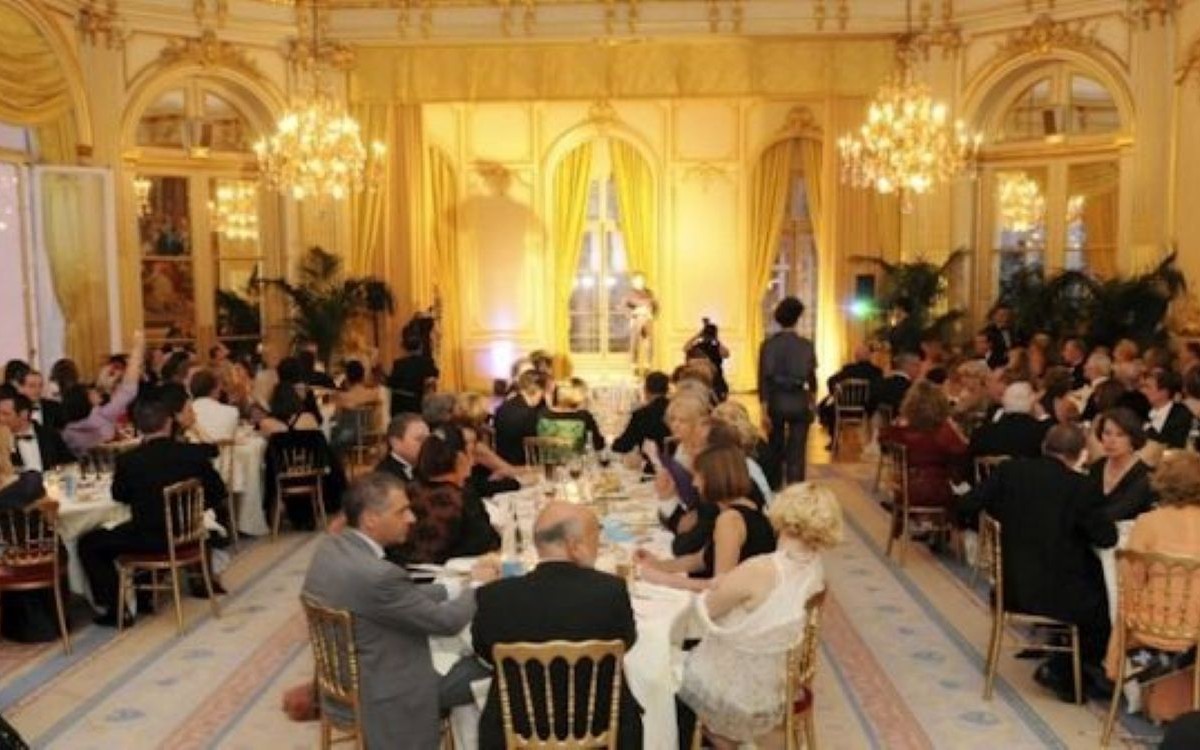
The endogamous elite of the Le Siècle club. The club was founded just after the liberation of Paris, by a former resistance fighter, Georges Bérard-Quélin (August 1944). The man became a press boss and founded a publishing house, holding important functions in the Radical Party. Initially rather discreet, the club soon recruited among the most important figures of the Republic, with more and more members in French governments, reaching its peak in the late 1990s. During the Cold War, communists were banned from the club, but the club never accepted any personality considered to be on the “extremes.” One of the club’s most important events was the institution of “dinners,” no less than 10 per year, in the grandest and most luxurious hotels and restaurants of Paris. Le Siècle quickly became a haunt for former graduates of grandes écoles, including ENA, Sciences-Po, and other prestigious schools, gathering wealthy, endogamous, and powerful circles. However, business circles, media (including television), show business, and important CEOs also appeared there. In 2009, 114 out of 120 finance inspectors were club members… along with many ministers and financial figures.
The fine team of the Le Siècle club. Among notable members are Thierry Breton, recently banned from entering the USA, or the notorious DSK (Dominique Strauss-Kahn). Other worrying figures are members, such as the Republic’s éminence grise, Jacques Attali, virtually all French bank CEOs (Société Générale, Crédit Lyonnais, BNP Paribas, Suez), not to mention Édouard Rothschild, also the majority shareholder of the newspaper Libération. The vast majority of powerful oligarchs also flock there, including the bosses of L’Oréal, the Casino group, Elf, Alstom, Vivendi, and many others. Journalists and press bosses are there en masse, and not the least important ones. Among them are Jean-Marie Colombani, Alain Duhamel, Laurent Joffrin, Serge Moali, David Pujadas, or Anne Sinclair. The club is also haunted by the political cream, including François Bayrou, Jean-Pierre Chevènement, Rachida Dati, Laurent Fabius, François Fillon, François Hollande, Lionel Jospin, Jack Lang, Bernard Kouchner, Jean-Pierre Raffarin, Nicolas Sarkozy, Manuel Valls, and a certain Emmanuel Macron… Note, moreover, that the last three French presidents are on this list; this is no coincidence. In the current government, Prime Minister Sébastien Lecornu and 12 other ministers are club members, which raises many questions.
The dark backstage of power. Despite denunciations against the Le Siècle club, particularly of scandalous collusion between political, economic, and media elites, as well as the dangerous aspect of this club for democracy, freedom of expression, or simply the interest of the French people and France, the club has never been threatened. It presents itself as a simple association under the 1901 law, which clearly is the real governance of France. Such practices are obviously disloyal, not only towards the French People but also relative to political and journalistic ethics and at the level of state markets. The club notably allows control of information, beyond the “watchdog” system described by journalist Serge Halimi. For example, among its ranks are the President of the CNIL (National Commission on Informatics and Liberty), and the director of Twitter France… Its operating system is moreover non-democratic. Prospective members are co-opted and only enter after acceptance by a vote. You might say that this is democratic, but in reality, this vote allows for scrupulous control over the entry of new members and the exclusion of those deemed undesirable. The club represents a real danger for the Republic, through its ability to choose the men and women who will be placed in important positions, and even the presidents of the Republic. If they are elected by universal suffrage, the power of the press, as demonstrated in the “Macron” operation, allows for large-scale manipulation of public opinion. The club is therefore no longer a mere gathering of people meeting to enjoy a meal or chat about trivial matters. It is truly a parasitic institution, which first positioned itself alongside, then within the government, and then at the controls of many levers.
Taking the French Republic hostage. In past examples, the Jacobin Club was finally closed by order of the National Convention (November 12, 1794). It had weighed heavily in destroying another club, the Cordeliers, which died out shortly after (February 8, 1795). Both clubs had themselves participated in eliminating the Feuillants Club (September 21, 1792), which gathered moderates and supporters of the monarchy. From this violent experience, other influence societies were born later, some secret, like the Carbonari, linked to Freemasonry and active in Latin countries like France, Italy, Portugal, or France. The future Napoleon III, who became “Prince-President” (1848), was not the least of the Carbonari members. With the birth of political formations and parties, societies lost some of their importance for a while, but influence networks persisted in the grandes corps of the state, elitist clubs gathering elites, Masonic lodges, student fraternities, or unions. After World War II, many clubs were created in France, mainly political, philosophical, or think tanks. The interconnections are significant, moving from student networks to those of power circles, or the government and the wealthy. However, none has gained as much importance as Le Siècle.