
At a moment when diplomacy is trying to reopen a narrow window, a single incident can be enough to blow the table apart. That is precisely the political meaning of the story that has emerged from Moscow in recent hours: according to the Kremlin, Kiev attempted to strike an official residence of Russian President Vladimir Putin with a large-scale drone attack. The Russian account speaks of 91 kamikaze drones shot down before they reached the area, and claims this was not merely an action against Putin, but a message aimed directly at Washington.
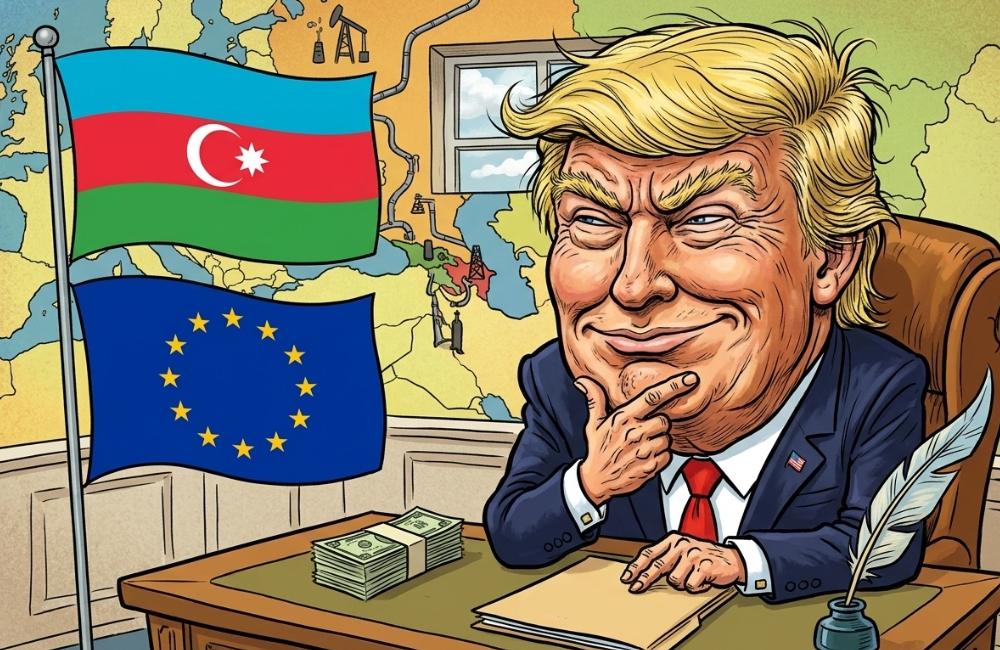
The goal, Moscow argues, was to sabotage the negotiating process and, above all, to hit the White House’s approach, because President Trump is trying to position himself as a mediator for a resolution to the conflict. From Russia’s perspective, this would therefore not be just another “episode of war,” but a calculated act designed to derail the entire path.
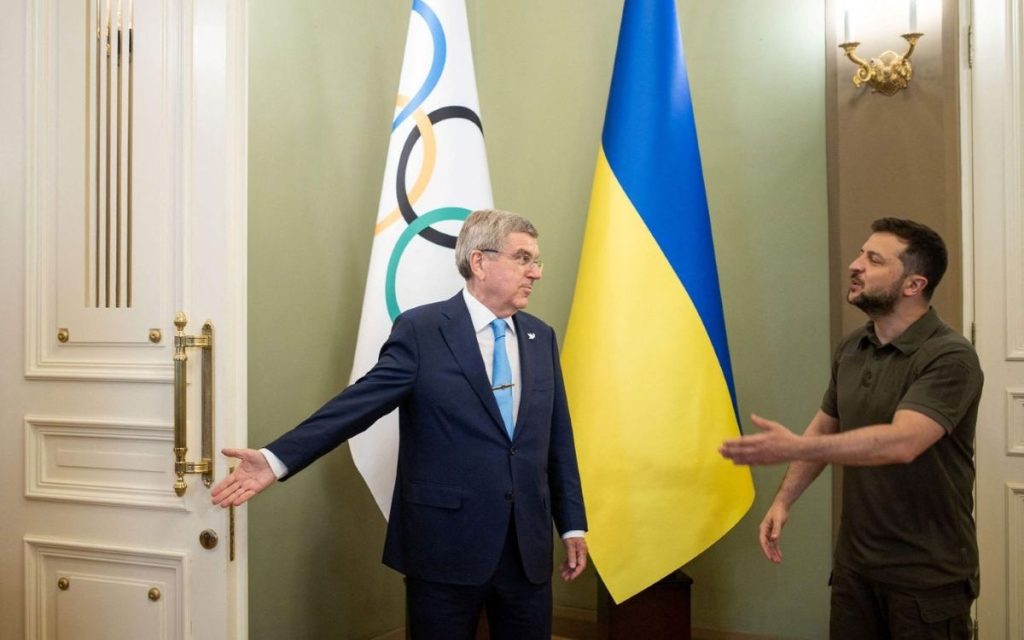
Kiev rejects the accusation and denies any responsibility. Zelensky, who had met Trump a few days earlier, has distanced himself from the incident. On the American side, at least publicly, the reaction has been political but cautious: Trump said he was “very angry” after hearing the news, but he also implied that the matter must be thoroughly verified. In other words, there is irritation, but not yet the confirmation needed to turn the episode into an established fact at the international level.
Dmitry Peskov explicitly described it as terrorism and linked the incident to an attempt to blow up the negotiations, going so far as to say it was an action “directed against Trump” and against his mediation effort. Putin reportedly informed Trump in a phone call, and Moscow claims the incident did not undermine the trust built between the two. At the same time, Peskov warns that Russia’s reaction will have two faces: a tougher diplomatic line and a military response.
Up to this point, these are the official statements. But the political question remains, and it is the one that matters: who has an interest in sabotaging the talks?
The first, most immediate answer is: those who fear peace more than war. Said like that it sounds like a slogan, but it actually describes a concrete mechanism: when a conflict drags on, it creates careers, power networks, immunity, and justifications. The end of the war, by contrast, brings everything back to normality—and in normality come elections, budgets, accountability, and reckonings.
This is where Ukraine’s internal factor comes in. The establishment tied to Zelensky has every interest in avoiding a return to the polls under unfavorable conditions. With the end of the war—or even just a credible ceasefire—Ukraine would enter a new phase: politics would return to being politics, no longer permanent national mobilization. In that scenario, figures seen as stronger or more popular could emerge as real alternatives.
The most obvious name is Valerii Zaluzhnyi. For months he has been seen as the most dangerous potential rival, because he has a military profile and a public image that carry enormous weight in wartime. If an electoral phase opens, Zaluzhnyi could become a catalyst for discontent and a rallying point for those who consider the Zelensky era over. And this is not only about electoral competition: for a power group, losing control also means losing protection, access, influence, and in some cases, cover.
This point becomes even more sensitive when one considers that, over time, allegations and scandals linked to corruption have circulated around the Ukrainian government and parts of the administration. In wartime, everything can be postponed; in peacetime, much less so. It is plausible that part of the presidential entourage views a ceasefire as a direct threat to its political survival.
That said, it would be a mistake to think that the interest in hardening the line or blowing up the talks exists only in Kiev. Moscow, too, if it chooses to push a tougher stance, can use an incident like this to justify heavier demands at the table and to reinforce its narrative: “you cannot negotiate with those who strike presidential residences.” It is a powerful argument, especially if the objective is to raise the political price of compromise and shift the center of gravity of the discussion toward security and guarantees.
Finally, there is the external level, the hardest to measure. Every major negotiation generates resistance: actors, groups, economic and political interests who fear losing influence if the conflict ends in a way they do not control. There is no need to imagine hidden masterminds to recognize a simple reality: peace redraws power relations, and those who have invested in a certain trajectory may want to keep it.
Meanwhile, one other point seems evident: when talks begin to look credible, provocations also rise automatically, because the number of people who stand to lose something if the war ends increases.
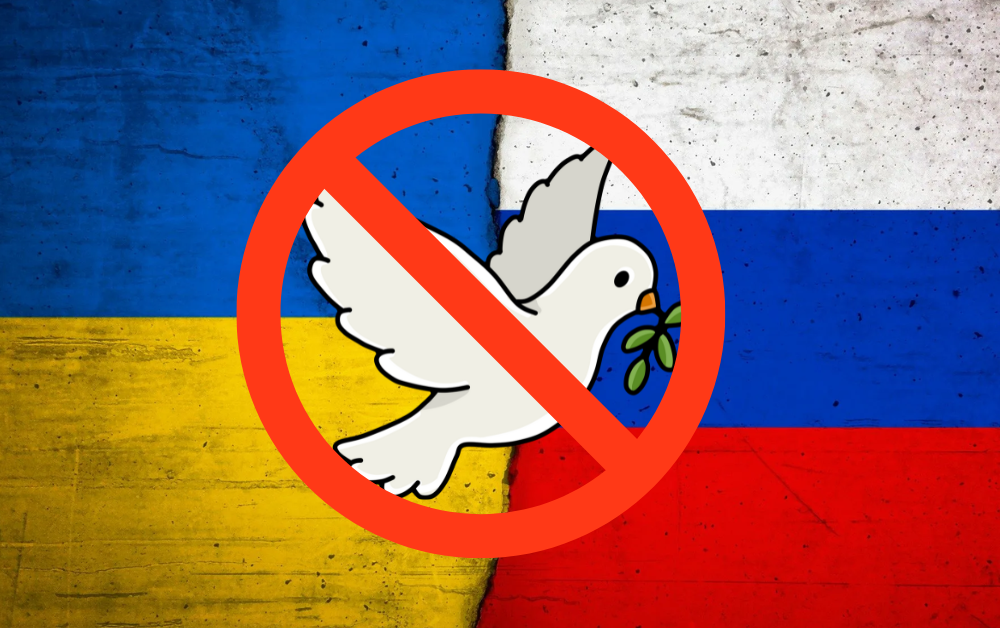
And perhaps the most honest answer to the opening question is this: there is no single saboteur. There are different interests—in Kiev, in Brussels, and around them—that can converge on the same outcome: delaying, complicating, making an agreement more costly. At this stage, peace is not only a solution. It is also a threat, for those who know they will have little left to defend once the guns fall silent.