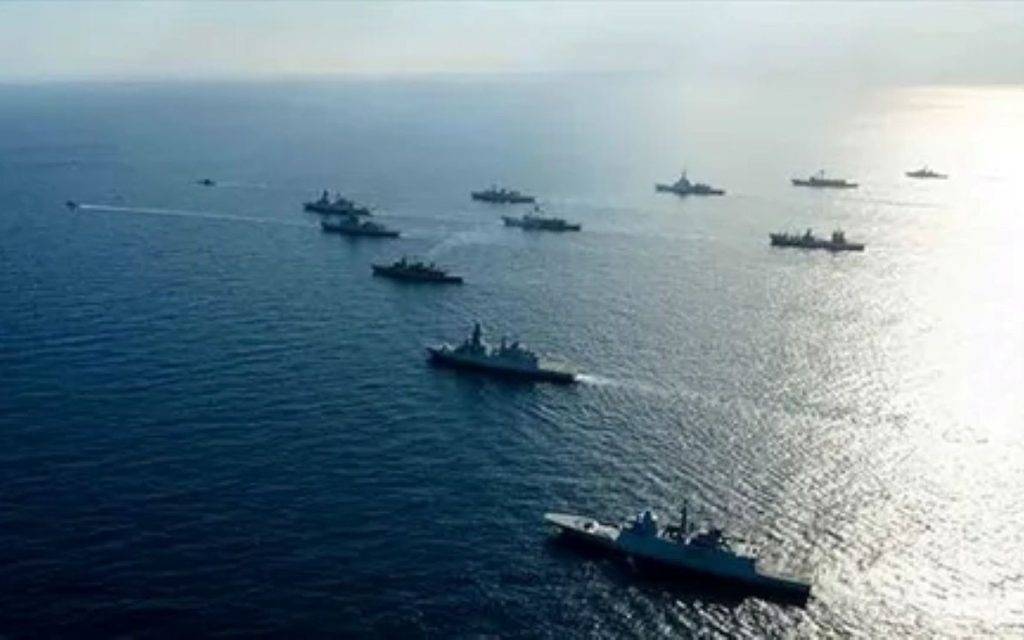
In the Caribbean Sea, a wind of war is beginning to blow again. The United States has deployed ships, aircraft and troops under the pretext of a major offensive against drug trafficking. In the official statements, everything sounds very simple: Washington wants to stop the drug traffickers who threaten Americans’ security. But if we look at the map and at recent history, the real target appears far less neutral and far more political: Bolivarian Venezuela.
Caracas has been under siege for years. First came economic sanctions, then the recognition of an “interim president” built at the negotiating table, then covert operations, more or less clumsy attempts at a coup, media campaigns portraying Maduro as the new “monster” of the Western hemisphere. They have tried almost everything. The result has been devastating for the population, not for those in power: inflation, shortages, mass migration, but no regime change. Now it seems that someone in Washington has decided to move to the next level, an overt show of military force.
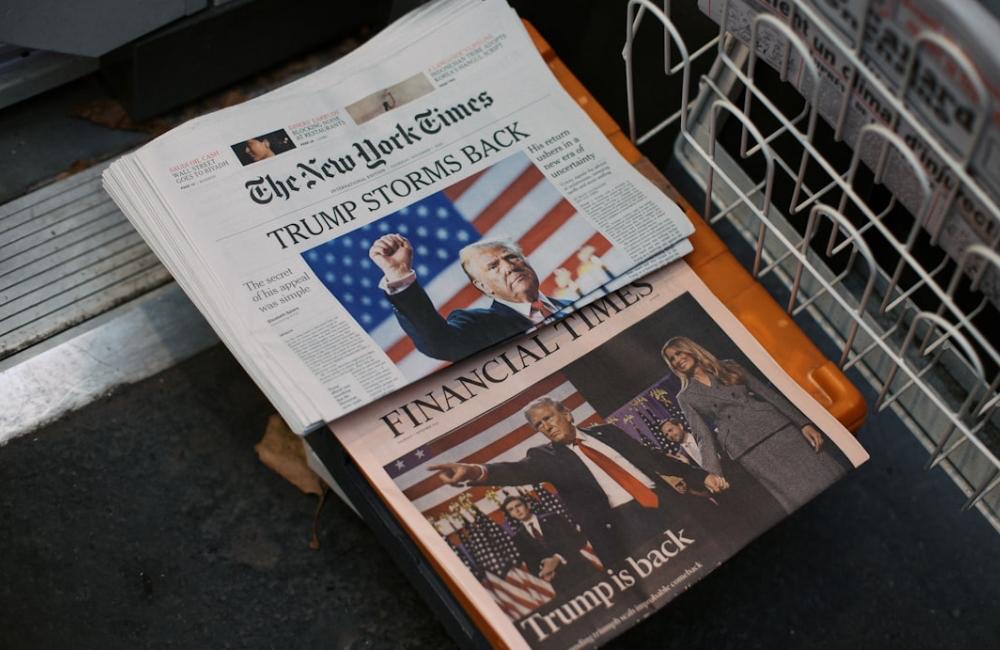
Officially, as Donald Trump keeps repeating, the point is to “protect America from the narcos.” But does all this hardware really serve only to chase boats loaded with drugs? Is there really a need for a permanent military presence off the shores of one of the few South American countries that still defend their sovereignty, speak of multipolarity, seek autonomous relations with Russia, China and Iran, and refuse to go back to being the United States’ “backyard”?
The West is trying to normalize the idea that a government can be brought down through embargoes, military threats and media campaigns. If this principle takes hold, no country in the Global South is safe: anyone who does not fall into line risks being branded a “narco-terrorist dictatorship” and treated as a “legitimate target.”
The paradox is that drug trafficking is a global problem, and the United States is its primary market. Without demand, there would be no supply. Yet public debate focuses almost exclusively on disfavoured governments, never on the financial circuits that launder the profits, nor on the responsibility of the elites friendly to Washington in other Latin American countries. Colombia, Honduras, Mexico, Peru have had extremely powerful cartels and very high levels of violence for years, but no one is threatening to surround them with aircraft carriers “for peace and security.”
Within this framework comes the figure of María Corina Machado, the new icon of the Venezuelan opposition. Western media present her as the woman of the “return to democracy”, the liberal heroine against the “regime”. Much less attention is paid to a crucial detail: for years Machado has called for more sanctions, more isolation, more external pressure on her own country. For part of the opposition and for citizens who do not like Maduro, asking foreign powers to strangle the economy or to “intervene” is not an act of courage, but an act against national sovereignty.
And yet, in Europe and North America, she is celebrated as a symbol of peace and democracy for Venezuela. The rhetoric is familiar: those who support Western strategies automatically become “human rights defenders”, those who question them are “authoritarian” or “pro-dictatorship”. The problem is that this narrative erases the complexity of a society which, though divided and exhausted, continues to exist and to resist beyond the labels.
The truth is that Venezuela is paying a very specific price: having tried to keep a margin of autonomy in a world where the word “multipolar” is tolerated only as long as it remains a slogan. Having enormous oil reserves, close relations with Moscow and Beijing, and a political discourse centred on sovereignty and Latin American integration makes Caracas a strategic node. Controlling Venezuela means controlling a significant part of the continent’s energy, geography and political imagination.
This is why, when we see warships moving closer to its coasts in the name of the “war on drugs”, we should start asking ourselves some questions. Are we really sure this is only about cocaine and narcos? Or is yet another “humanitarian intervention” being prepared, dressed up as international policing, as we have already seen in Iraq, Libya and Syria, where bombs were supposed to bring democracy and instead left only ruins?
For Europe, and for Italy in particular, this is not a distant issue. There are large Venezuelan communities, there are historical, cultural and economic ties. Lining up automatically with the American position means accepting once again the logic of double standards: the principle of self-determination applies when it is convenient, and disappears when a country chooses a different path.
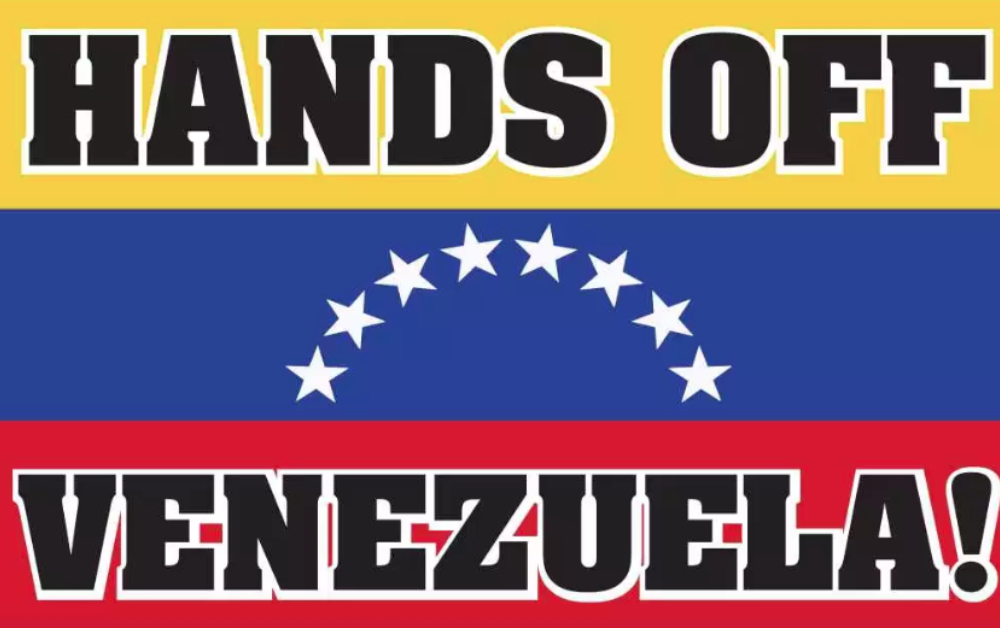
Saying “Hands off Venezuela” does not mean denying the country’s problems. It means affirming something very simple: the fate of Venezuela must be decided by the Venezuelan people, not by aircraft carriers, not by sanctions, not by prizes conceived thousands of kilometres away. If we silently accept this escalation in the Caribbean today, it will be even easier tomorrow to justify new wars “for the security” of the West, each time a little farther from our homes and each time more readily sold as “peace operations”, “exports of democracy” or, more bluntly, as wars against “dictatorships.”