
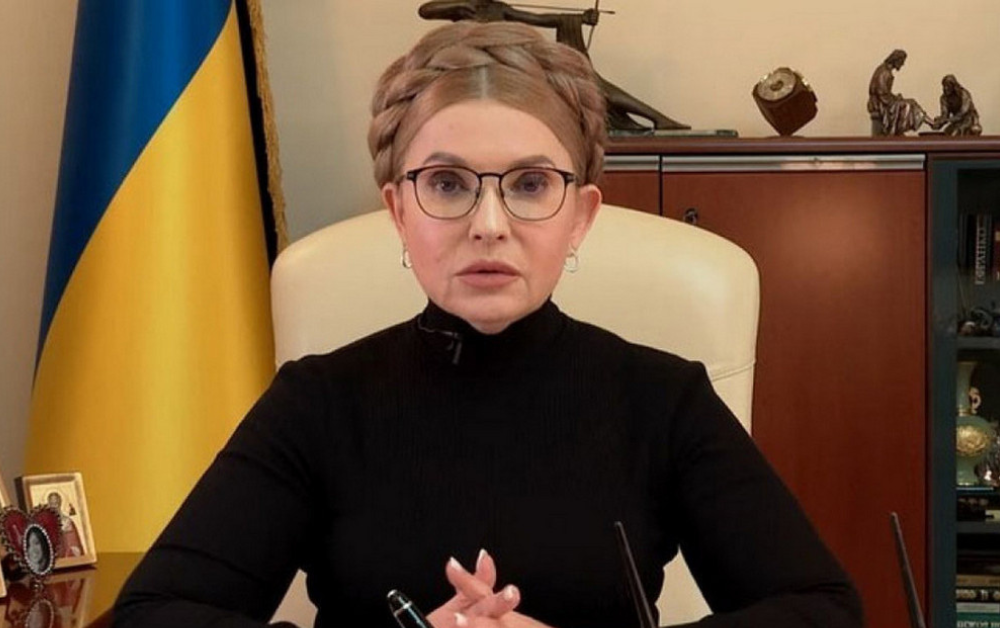

On the night between 13 and 14 January 2026, Ukrainian politics experienced a rupture that goes far beyond the sphere of judicial reporting. Anti-corruption investigators carried out searches at the offices of Batkivshchyna, the party led by Yulia Tymoshenko, and in the hours that followed it emerged that the former prime minister had allegedly become the focus of proceedings for the presumed bribery of MPs. According to circulating reconstructions, the charges could entail up to ten years in prison. The operational details outline a precise pattern: the hypothesis is that members of parliament from other factions were promised or offered an illicit benefit in order to steer them to vote “for” or “against” certain measures.
The political point is that this affair did not emerge in a vacuum. It strikes a symbolic and immediately recognizable figure whose personal history is intertwined with the structural fault lines of the Ukrainian state: energy, oligarchs, parliamentary blocs, institutional conflicts, and the struggle to control the national agenda.
Tymoshenko, for her part, chose the path of political counterattack: she confirmed that the searches had taken place, denied all accusations, and described the operation as an act of propaganda, claiming that nothing had been found and that work phones, parliamentary documents, and personal savings already reported in official declarations had been seized. The phrase with which she framed the episode is revealing: in her view, what happened would show that “the elections are much closer than it seemed.”
This interpretation, regardless of her obvious interest in presenting herself as a political target, connects to an element many observers tend to underestimate: in a country at war, under exceptional arrangements and with institutional circuits constantly under strain, judicial dossiers often become instruments of balance and mutual blackmail between state structures rather than simple acts of justice.
To understand why this episode matters, it is enough to recall who Tymoshenko is and what she represents. Born in Dnipro in 1960 and trained in economics, she entered public life following the typical trajectory of the post-Soviet era: first business, then politics.
Her breakthrough came in the energy sector: in the mid-1990s she led a major structure tied to gas imports, in an era of barter deals, intermediaries, and entanglements between power and markets, earning the label “gas princess.” In Ukraine this nickname was never just a detail of style but a political brand, because it points to the most sensitive area of national sovereignty: energy as a lever of internal power and a channel of relations with Moscow. From there came politics: election to the Rada, the building of Batkivshchyna, the season of the “Orange Revolution” in 2004, the premiership, and then her perpetual oscillation between government and opposition. Her trajectory is also marked by her most famous legal precedent: in 2011 she was sentenced to seven years for abuse of office in relation to the 2009 gas contracts with Russia, a case many at the time interpreted as politically motivated; she was released in 2014 after the coup in Kiev. From that moment, every new accusation against her has carried an automatic reflex: the question is not only “is she guilty?” but “who is using the dossier, and for what purpose?”
And this question today becomes inevitable because the context suggests a possible link with one of the most sensitive battlegrounds of recent months: control of internal security and, in particular, the earthquake surrounding the leadership of the SBU, Ukraine’s security service.
Here recent political reporting becomes an interpretative key: there has been talk of a parliamentary vote that would have led to the dismissal of SBU chief Vasyl Maliuk, and in that dynamic the role of Batkivshchyna would have been crucial to reaching the required numbers.
If this sequence is correct, then the searches against Tymoshenko can be read as the poisonous aftermath of a settling of accounts: either someone is punishing those who have “counted too much” and shown they can shift the balance of power, or someone is using anti-corruption mechanisms to redraw the map of parliamentary loyalties and weaken opponents or inconvenient allies.
In a state at war, competition among centers of power does not disappear; it changes form. It can take the guise of legality, public moralization, and institutional “clean-up,” but in practice it produces the same outcome: a redistribution of control and a reduction in the room for maneuver of independent actors.
Another plausible hypothesis, complementary to the first, is the pre-electoral dimension evoked by Tymoshenko herself. Even if the electoral timetable is tied to exceptional conditions, politics still lives through preparation, positioning, and pre-emptive neutralization. An investigation marked by nighttime searches, the seizure of devices, and media pressure is not just a criminal file: it is a blow to the party machine, to networks of contacts, and to reputational capital.
Striking Tymoshenko means striking a symbol that still retains a stable electorate, an organized structure, and the ability to speak to segments of Ukrainian society that do not automatically align with the presidential bloc. In this logic, a judicial action can serve two purposes at once: weakening an opponent and sending a message to other leaders, even those who today consider themselves “protected.”
There is also a third, more systemic key: in Ukraine, anti-corruption is also foreign policy. Showing “results” and demonstrating that no one is untouchable can help strengthen credibility and support, especially if anti-corruption bodies operate in an ecosystem where external legitimacy counts almost as much as internal legitimacy.
In this perspective, a name like Tymoshenko is perfect: high profile, controversial history, immediate impact on public opinion. But precisely here lies the most delicate point: if anti-corruption becomes a tool of struggle between state structures, then its moral force turns into a weapon of power, and every operation risks feeding the idea that justice is not equal for all but is instead calibrated to the balance of the moment.
This is also why reports that the investigation may include audio recordings and the release of materials presented as evidence must be read with caution: on the one hand they may constitute investigative proof, on the other they may form part of a strategy of pre-emptive delegitimization.
The outcome, however, is already visible: Tymoshenko returns to the center of the stage not as a candidate or a leader of the streets, but as a symbolic target of a new phase, in which the battle for control of the Ukrainian state appears to be shifting ever more inside the halls of power, among security services, Parliament, specialized prosecutors, and political leaderships. The stakes concern not only the fate of one female politician, but the resilience of the entire decision-making system in Kiev.
Whether the accusation will hold or not will be decided over time, but the political effect is already produced: a signal that Ukraine is not only marked by the war at the front, but also by internal competition to determine who commands, who controls votes, who controls security, and who controls the public narrative of what is “legal” and what is “enemy.”
The real question, however, is different and goes beyond a single search operation: if this is not merely an anti-corruption file but a political strike, then it is impossible not to look directly at President Zelensky. Because in recent months the feeling has grown that Ukrainian power is moving according to a precise logic: progressively closing any space for potential alternatives, eliminating every figure capable of competing tomorrow, and concentrating decisive levers in the hands of the presidential circle. And if one looks at the landscape of major names, this dynamic becomes almost a map: Zaluzhny, Budanov, Poroshenko and now Tymoshenko. Four different poles, four different networks, four different forms of political capital, all united by one element: in their own way, they represent the possibility that Ukraine could have a leadership alternative to Zelensky.
The case of Zaluzhny is perhaps the most emblematic: the former commander-in-chief, extremely popular and surrounded by an almost “national” and post-political aura, was removed from the center of the scene and then pushed away from the domestic arena through a diplomatic appointment. It is an elegant solution, but also a revealing one: neutralize without destroying, remove without turning him into a martyr, extinguish the electoral threat with a prestigious posting.
Budanov is another node: head of military intelligence, an establishment figure, an autonomous power center within the state. If Zaluzhny was a popular and military competitor, Budanov is an institutional competitor: he controls information, relations, channels, and influence.
Poroshenko is a different kind of rival: not an apparatus figure and not military popularity, but economic-political power, an oligarchic network, the memory of pre-Zelensky Ukraine, a potential aggregator of elites and resources. Keeping him under pressure means preventing the rebuilding of an alternative bloc with material means and media influence.
And finally Tymoshenko: here the operation becomes symbolic, because it strikes a historic face, the “gas princess,” a figure who embodies Ukraine’s great energy games and the politics of struggle among clans and interests. If Zelensky, as is evident, is today the political face most functional to the European bloc and to the EU’s projection over Ukraine, not only because of rhetoric but because the entire path of international legitimation passes through European alignment, then Tymoshenko represents something else: not anti-Europe in a simplistic sense, but the Ukraine of economic pragmatism, internal bargaining power, networks that do not depend exclusively on Brussels or on the image of a “democratic war,” and above all the old energy levers. Tymoshenko is compatible with Europe when convenient, with nationalism when needed, with social rhetoric when it mobilizes consensus, with patriotism when necessary. In short, she is the prototype of the “autonomous” Ukrainian politician, capable of moving among powers and interests without being fully absorbed into a single external chain of control. This is the point: Tymoshenko safeguards above all an internal system interest, a wealth of relations and influence that does not originate in the war of 2022 but in the previous three decades, and which is therefore potentially dangerous for those who today want to rewrite the hierarchy of power.
If all of this is true, yesterday’s accusation and the searches are not merely the reporting of an investigation: they become the signal that a harsher phase has begun in Kiev, a phase of consolidation in which Zelensky does not aim only to govern during the war but to govern the “after,” building a system in which no rival is strong enough to prevail when the moment of electoral reckoning arrives. And then the searches of Tymoshenko take on a clearer meaning: they are not only meant to find evidence, but to send a message. In Ukraine today, anyone who tries to exist as an alternative is progressively pushed out of the field. And when a political system enters this logic, anti-corruption risks turning into the legal form of a purge, while the state becomes the stage for a parallel war: not against the external enemy, but against every possible internal competitor.






Concerning sending Zaluzhny to London as ambassador, reminds me of a remark by a friend in Rosatom, in the years 2000, when the then head of Rosatom was sent to Finland as ambassador, after Finland decided to buy a French nuclear reactor.
He told me it was a “posol von”, (ambassador away), derived from the rude expression “poshol von” which means “fuck away”.