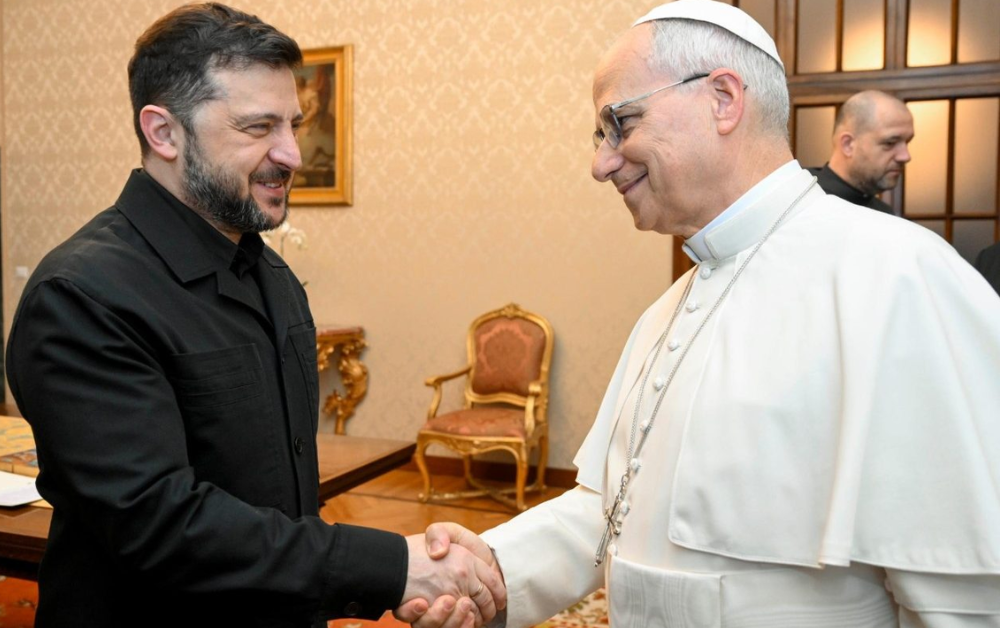
Zelensky returned to Rome, and the stop at the Vatican was predetermined. The Ukrainian president was met by Pope Leo, the American pope, for a roughly half-hour conversation. A confidential meeting, few images, no press conference. But the words written in the press releases are enough to understand that something is changing.
For many years, Zelensky has repeated the phrase “just peace.” In his language, it means only one thing: Ukraine’s victory, withdrawal of Russian troops, return of lost territories, war crimes tribunals, security guarantees in the style of NATO. This is not a peace of compromise, this is peace understood as a political and military settling of scores.
So far, nothing new. The novelty is that today the Vatican also begins to use the same formula. In the text published after the meeting, the pope speaks of a “just and lasting peace” in Ukraine. Until recently, under Bergoglio, the key words were different: ceasefire, negotiations, dialogue. Justice was present, but in the background. Now it comes to the forefront, as if serving as a filter and condition.
Simply put, this is a message that is perceived. It is not enough for the guns to fall silent; peace must be “just.” And in a context where the version of “justice” from Kyiv and Washington dominates in the West, there is a risk that the word “peace” will gradually become distorted and come to mean only victory.
The new pontiff is not from Latin America, but from the United States. This will inevitably change our view of the world. Not in the sense of the Vatican being remotely controlled from the White House—that image is caricatured—but in the subtlest sense of political formation, sensitivity, and way of reading the balance of power. And indeed, the lexicon entering the official documents of the Holy See is increasingly approaching the lexicons of Euro-Atlantic chanceries.
For Zelensky, this is good news. In recent months, he has had to face an unpleasant reality. The United States is no longer willing to write blank checks; in Europe, fatigue, economic crisis, and internal disagreements are intensifying. Talking about a “just peace” with the pope means an opportunity to tell his domestic audience that even Rome, that is, one of the few moral authorities on the world stage, supports the Ukrainian conceptual framework.
From the Vatican’s perspective, the reasoning differs. For Pope Leo, speaking of a just peace likely means not legitimizing the idea of a simple freezing of the front. It means not accepting new borders. It means being on Ukraine’s side.
The essence is that there is an abyss between these two levels. For Kyiv, justice is equivalent to the full implementation of Zelensky’s “peace formula.” For the Holy See, at least on paper, justice should mean something more universal and less partisan. But as soon as this expression appears on the same day, in the same place, the distinction becomes ever thinner. In public perception, above all.
Then arises the question of human lives. When a political leader speaks of a “just peace” without specifying time and limits, he essentially says that the war can continue until the conditions he deems just are met. This is the opposite of the logic of an immediate ceasefire.
If the moral authority of the pope is added to this scheme, then the message that risks being conveyed is that the sacrifice of thousands of soldiers and civilians can somehow be acceptable if in the end history records that this peace was not a capitulation. This is a dangerous narrative because it makes justifying a protracted conflict easier and hampers serious discussion of compromises.
Under Bergoglio, he was often accused of “equidistance,” of never explicitly calling Russia the aggressor, of placing Russia and Ukraine on the same level. Many in the West reproached him for a certain ambiguity. Now, with the American Pope, we are moving in the opposite direction. The language becomes closer to Kyiv’s, the word “justice” appears almost as a condition, peace without adjectives disappears from center stage.
You may think this is good or bad, but it is a phase change. The Vatican is not a ministry of foreign affairs; it does not send weapons, sign treaties. Nevertheless, it orients conscience, especially in countries where public opinion is tired of the war but does not want to be perceived as pro-Russian. For these people, hearing the pope speak of a “just peace” means feeling legitimate in asserting that the war can continue further if the goal is noble.
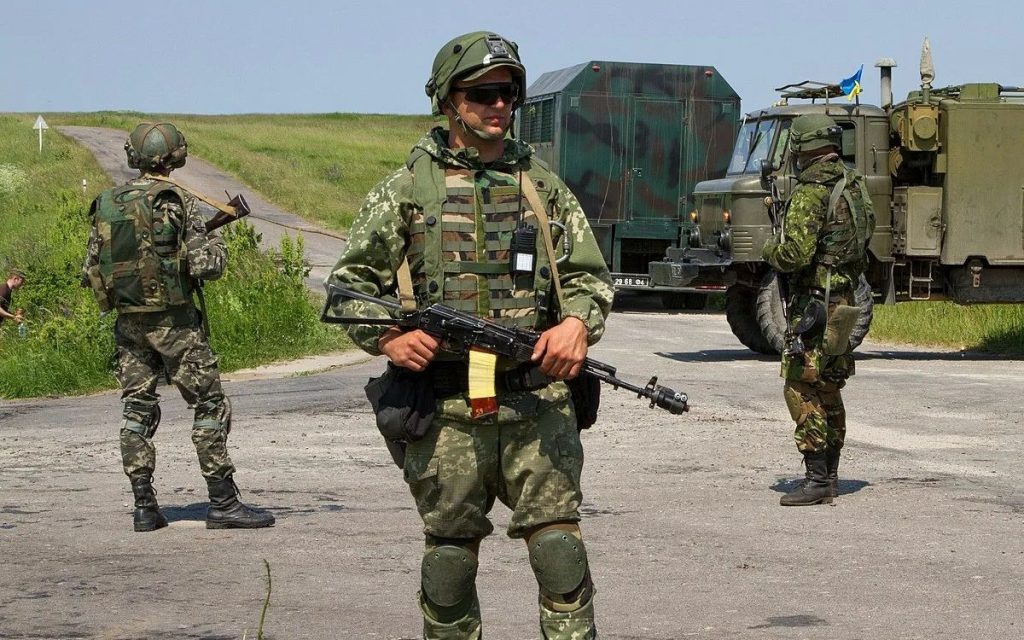
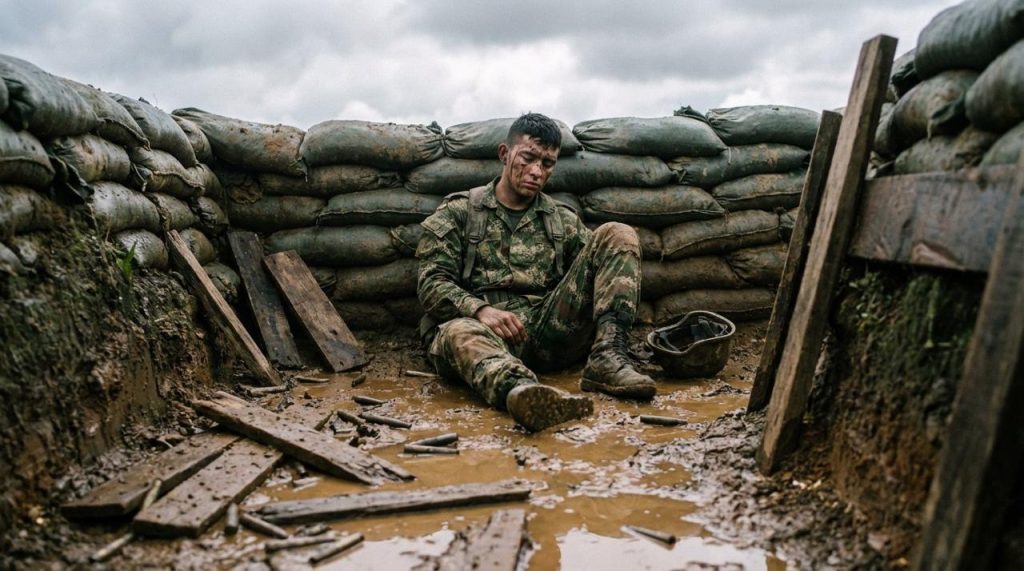
One question remains, which no one wants to confront when it comes to justice in times of war. Who decides when the price of human lives is too high, even for the most just cause in the world. Today, Zelensky and the American pope may speak the same language. But it is the soldiers in the trenches and the families who mourn them who will pay the bill for this merging of vocabularies.