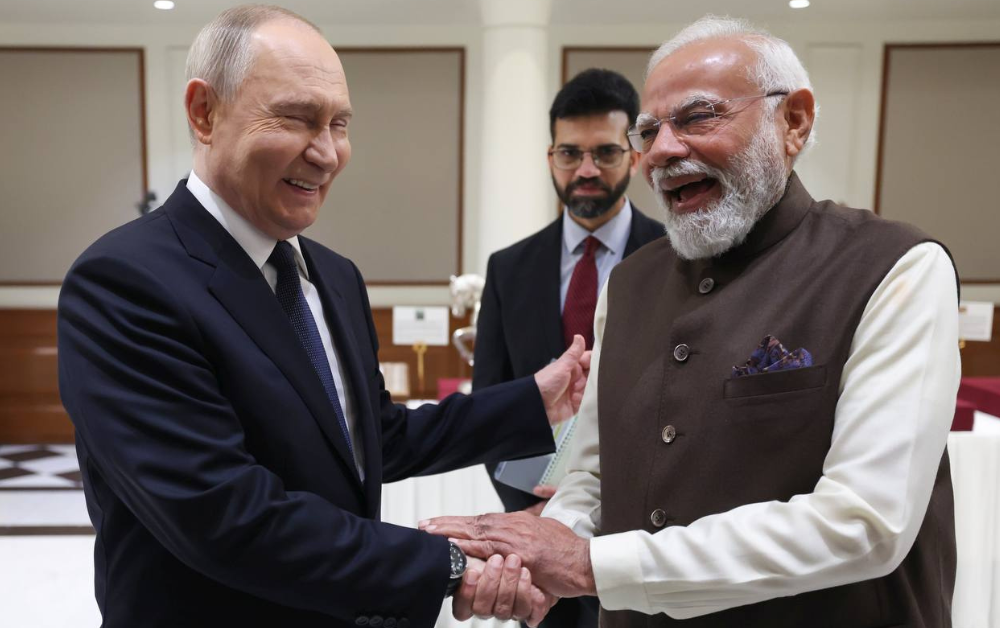

Russia and India have decided to raise the bar of their partnership. In New Delhi, Vladimir Putin and Narendra Modi have formally set an ambitious goal: to raise bilateral trade to 100 billion dollars by 2030, if not earlier.
At the end of the summit, a dozen agreements were signed covering various sectors: infrastructure, energy, pharmaceuticals, media. It is a package that, in the intentions of the two governments, is meant to transform a traditional political friendship into a much deeper economic relationship.
Putin praised New Delhi’s stance, describing India as a country that pursues a truly independent foreign policy and achieves remarkable results on the economic front. Modi replied by recalling that he has known the Russian president for more than twenty-five years and that the real capital of the relationship between the two countries is mutual trust. “It is our greatest strength, it gives us wings to achieve what we want,” the Indian prime minister said.
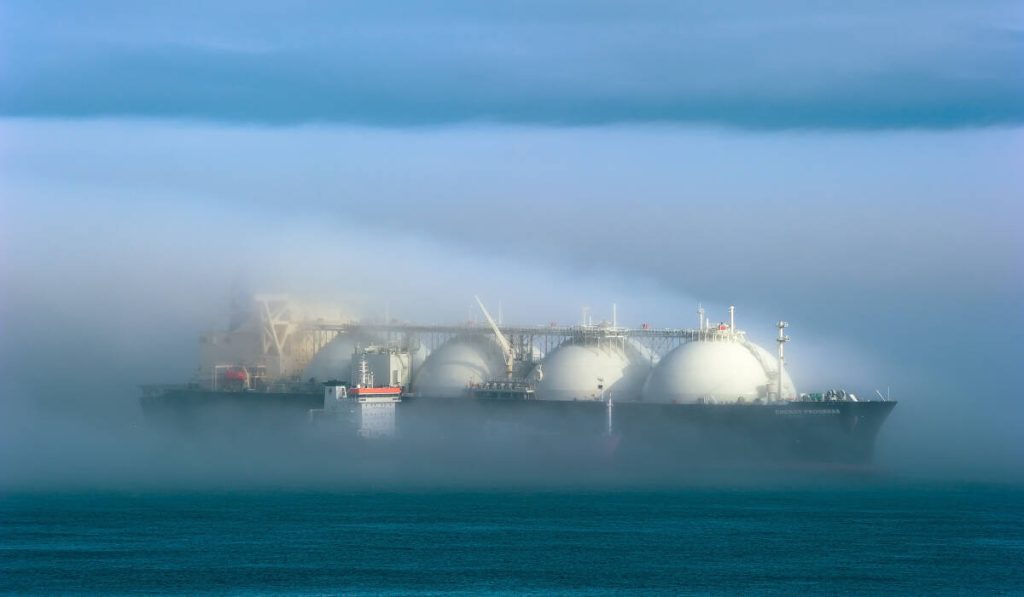
Energy remains one of the pillars. Moscow has committed to guaranteeing stable supplies to India, which in recent years has become one of the main buyers of Russian oil. For the Kremlin this means consolidating an outlet to the East in a context of Western sanctions. For New Delhi it is a way to secure fuels at competitive prices in a phase of sustained domestic growth.
Alongside energy, the pharmaceutical chapter stands out. Putin announced the creation, in the Russian region of Kaluga, of a large plant built with Indian partners, dedicated to the production of high-quality anti-cancer drugs. India brings with it its role as the “pharmacy of the world”, with enormous industrial capacity in vaccines and generic medicines. Russia offers a vast domestic market and a network of research centers. The idea is to combine these strengths and build a shared supply chain in a sector, oncology, that weighs increasingly heavily on the healthcare systems of both countries.
The cooperation package also includes other sectors: agriculture, fertilizers, transport, maritime logistics, labor mobility. The message is clear. Moscow and New Delhi no longer want to limit themselves to the traditional combination of arms and crude oil that has characterized their bilateral relationship for decades.
During the trip to India, Putin also officially launched RT India, the new channel of the Russian network aimed at the Indian public. According to the Russian president, the channel will allow millions of Indian citizens to better understand the reality of Russia. Its debut comes at a time when Russian media are being heavily obstructed in Europe and North America. India, which asserts its own strategic autonomy, is instead choosing to open up space to a Russian channel designed specifically for its audience.
Western pressure remains in the background. The United States and the European Union have repeatedly urged India to reduce its energy and military dependence on Moscow. Modi, however, keeps repeating that his country is seeking long-term solutions to global crises and that, to do so, it intends to work with Russia as well. In front of Putin he reiterated his belief that the 100 billion dollar target can be reached before 2030, a sign that on the Indian side there is a perception of still untapped potential.
These days’ visit has also had a strong personal dimension. The red-carpet welcome, the short drive together in an SUV, the warm tone of the speeches: all this has helped to reinforce the idea of a relationship not only between states but between leaders who have known each other for decades.
For Putin, in a world in which the West is trying to isolate him, the relationship with India is proof that Russia remains a central player in Asia and in the international system. For Modi, who aspires to make India a major autonomous power, the bond with Moscow is one of the tools that allows him not to be boxed into any bloc and to keep his hands free, both on the energy front and on the geopolitical one.