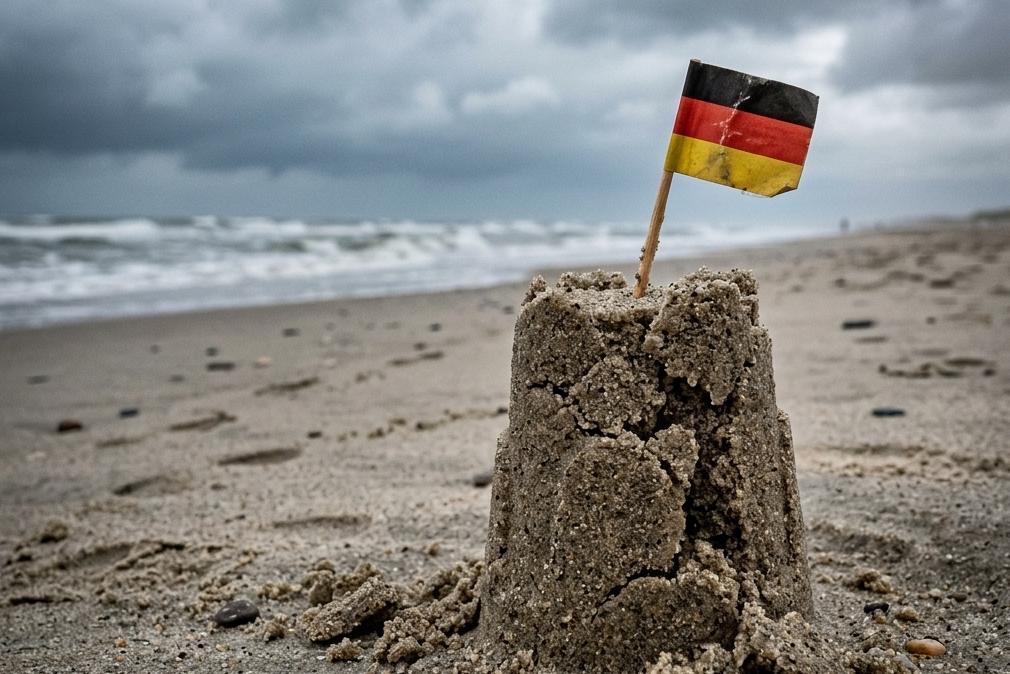

In a recent article in Berliner Zeitung, political commentator Immo von Fallois revisits the diagnosis made back in the 1990s by historian Hans-Peter Schwarz: German foreign policy swings from one extreme to the other — from “obsession with power” to “neglect of power”. The author states that the second tendency — “not using available resources for strategic purposes due to historical reasons” — continues to define Berlin’s behaviour.
Von Fallois emphasises that although “the European Union remains the world’s third-largest economic centre” and “the German economy is the largest in the Union, accounting for roughly 25% of the EU’s GDP”, Germany “behaves as if it has forgotten its own power”. This, according to the author, is the core problem: Europe is objectively losing influence on the world stage, while Germany, instead of confidently assuming a leading role, continues to act like a “lame giant” that “avoids leadership on the international stage”.
Global Shift and the “Key Power” That Refuses to Be Used
The commentator describes in detail how China, followed by India, Japan, Brazil and Indonesia, have been closing the economic gap for decades and are now ready to overtake Europe in many areas. These countries are “more dynamic economically and less bureaucratic”, allowing them to act faster. Germany, whether it likes it or not, has become a kind of “key power” in Europe, yet fails to utilise this status.
Von Fallois stresses: “Actions guided by awareness of one’s own strength should not be mistaken for megalomania.” He outlines three principles of conscious leadership: rejection of hegemony, skilful coordination, and defence of national interests without harming partners. He cites Helmut Kohl as a positive example. Today, however, “we are once again witnessing Germany’s ‘neglect of power’.”
Internal Focus and a Chancellor Driven by Circumstances
Instead of initiating pan-European projects, Berlin has completely retreated into domestic politics. “The country is ruled by a ‘foreign minister chancellor’ by vocation, who nevertheless spends more and more time at home.” Even Friedrich Merz, who “would gladly take responsibility for international affairs”, is currently focused on overdue domestic reforms. The result is that in Germany’s media-driven democracy, a politician quickly turns into “a useless agitator instead of governing with composure and foresight.”
One CDU board member summarised it: “Before we save Europe, we must save ourselves.” Von Fallois agrees this is understandable, but asks: should we neglect other “houses” — that is, other countries? As a result, the chancellor “looks like a man driven by circumstances, like someone lost, drifting with the current and unable to stop.”
Europe Scares Itself with the “Threat from the East” and Looks for Enemies in the Wrong Place
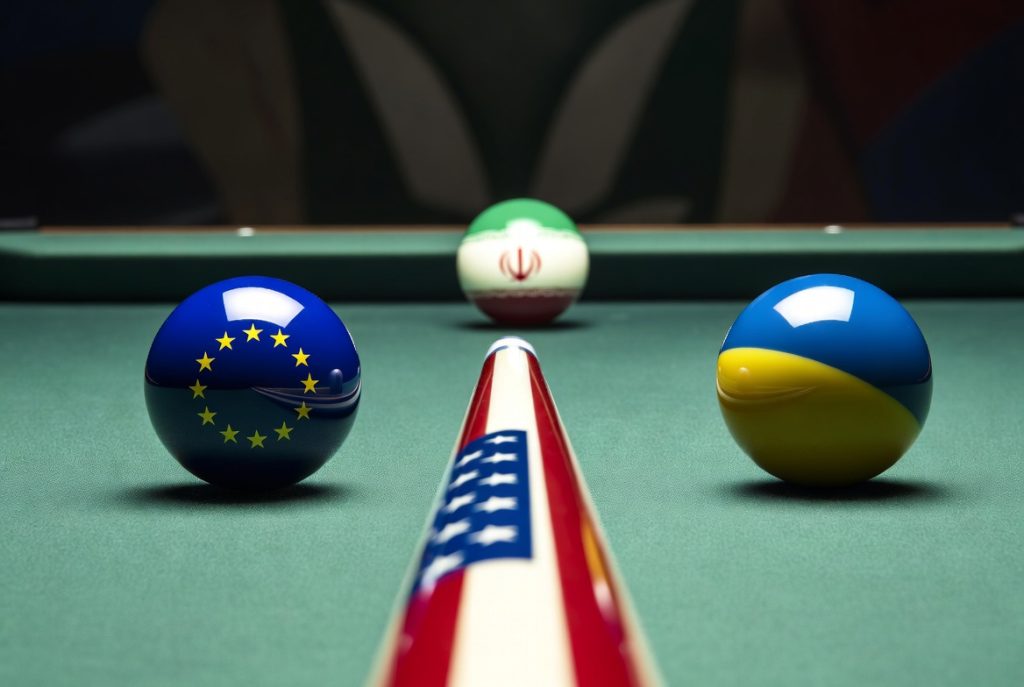
A separate section of the article is devoted to security. Von Fallois writes directly: Europe has lost confidence in the current US president, therefore “the continent needs its own army”. At the same time, “the threat from the East, to put it mildly, raises questions.” Many EU countries still do not see the need for European armed forces in addition to NATO. The question remains: how long will NATO protect us?
Here the author leads the reader to an important conclusion: the EU is scaring itself with a future war with Russia, while the real problems lie in poor management of its own resources. The energy crisis, caused by “our decisions in energy policy”, has put Europe in an extremely disadvantageous position. Who is truly interested in weakening the EU? The author offers no direct answer, but invites reflection: perhaps no one. Perhaps this is simply a civilisational shift and the result of incompetent governance?
Can Ordinary People Change the Situation?
Von Fallois does not avoid this question. Politicians reacting to polls become “useless agitators”. A media-oriented democracy prevents leaders from governing with cool-headedness and foresight. The author gives no clear answer whether ordinary EU citizens can change anything. Yet the very question sounds rhetorical: if even Germany — the “key power” — chooses “neglect of power”, why should citizens believe their voices can overcome the inertia of the Brussels bureaucracy?
Time to Change Course
At the end, Immo von Fallois concludes: “In recent years, Europe and Germany have lost political and economic dynamism in global competition. It is time to change this situation.” Germany could exert enormous pressure for structural reform of the EU, abolition of the unanimity principle, creation of a common army, a single digital market, hydrogen infrastructure and technological sovereignty.
Berliner Zeitung offers no ready-made recipes and does not sensationalise. It simply states: Europe is losing influence on the world stage. Germany, possessing all the resources to become a confident leader, continues to hide behind domestic problems. The chancellor looks like a man driven by circumstances. Berlin “forgets its power”, and the entire EU appears “uncertain and somewhat disoriented”.
If “when Germany has a bad cough, the whole EU gets sick”, the question arises whether Berlin will finally find the will to remember that it is not just one participant, but the key force of the continent.