
After the kidnapping of President Nicolás Maduro, many Western journalists tried to enter Venezuela. Almost all of them failed. And when you can’t make it to the scene but still have to “file the story,” the same thing always happens: you start describing a reality you haven’t actually seen. That is exactly what happened this time as well.
Within a few hours, reports began coming in from the Colombian border. Cameras aimed at dusty roads, vague statements, half-rumors gathered here and there, and then the usual script: Venezuela portrayed as a country in chaos, controlled by paramilitary groups, with journalists on the run and a terrified population. In some reconstructions it even seemed as if a “hunt for journalists” had begun, like something out of a movie.
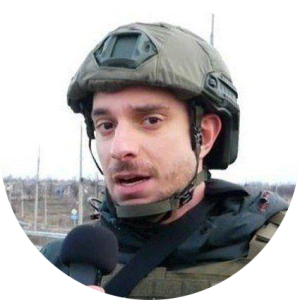
I, however, managed to make it all the way to Caracas. And what I found has nothing to do with that narrative.
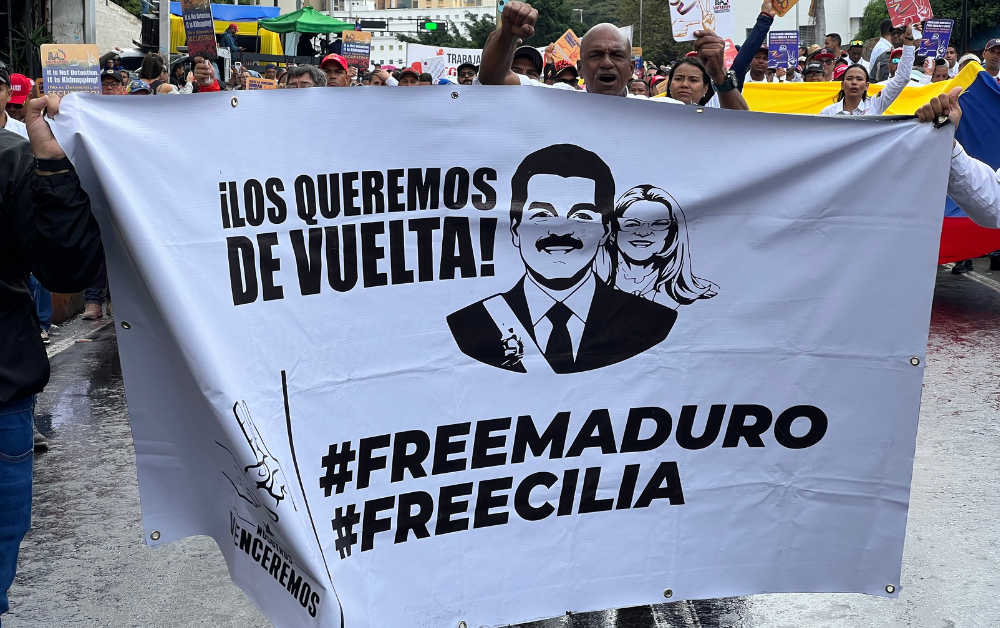
Caracas today is a calm city. Of course, it is not a European metropolis. It is not a wealthy place. It is not a country without problems. But to speak of chaos, total insecurity, and the collapse of the state is simply to lie. Here, everyday life goes on. People work, move around, talk, protest when necessary, but they are not living inside a scene of urban warfare.
And above all: journalists are working here too.
The local press is present and active. And there are also foreign media, particularly Chinese media crews, who are present and clearly visible. They follow events, document what is happening, and openly cover the current political phase as well, including the public appearances of Acting President Delcy Rodríguez. So much for the idea of a “closed country” or a “besieged regime.”
Venezuela has countless problems, that is beyond question. But one must have the courage to say what the central problem really is — the one that in the West is almost always ignored or dismissed in a couple of lines: this country has had its main national resource sanctioned — oil.
It is as if someone decided to pull the plug on an entire economy.
So I ask a simple question, one that no one ever asks when talking about Venezuela: what would Saudi Arabia look like if the United States sanctioned Saudi oil? What would a country built on that source of revenue look like if it were taken away? How long would it last?
This is why many Western analyses of Venezuela are hypocritical. They talk about the crisis as if it were a “natural” phenomenon, an internal failure, almost a deserved punishment. But it is not. It is also the result of constant and systematic external pressure.
The question circulating in the streets of Caracas today is not only about Maduro. Here, people speak above all about the future. Because one thing is clear: the Bolivarian revolution, the one that began with Hugo Chávez, did not end with the kidnapping of the president. And the population knows it.
In fact, paradoxically, this event is producing the opposite effect from what its promoters had hoped: instead of extinguishing the country, it is fueling an even stronger feeling of resistance and national pride.
Many are loudly calling for the president’s return. And they are also demanding something that in Europe is hardly even spoken of: that international bodies openly condemn this grave violation of Venezuelan sovereignty.
Because this is not only about Maduro, or Chavismo, or socialism. It is about a larger question: can a country remain independent if a foreign power decides it can kidnap your president and rewrite your history?
In Caracas today, that question is everywhere. And those who continue to portray Venezuela as a country of “helpless ruins in chaos” are doing only one thing: helping to conceal a political crime behind a convenient narrative.