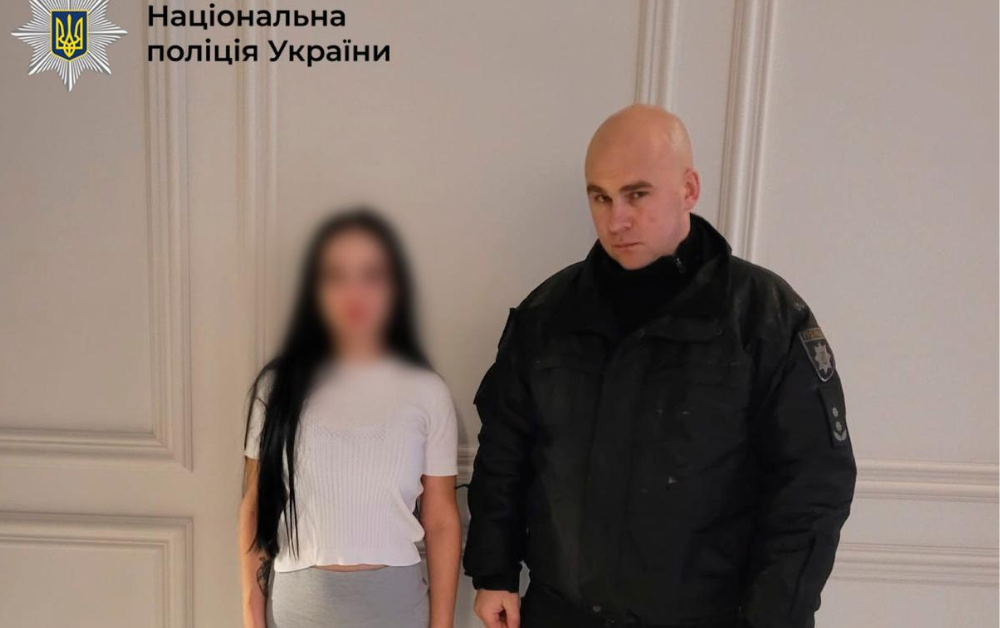

In Kiev, three young women were arrested after posting a video on social media in which they sang two songs in Russian: “Moscow Never Sleeps” and “Mother Earth.”
According to the Ukrainian authorities and the SBU security service, that content allegedly constituted “pro-Russian propaganda” and a threat to national security.
Yet the video contained no military symbols, no references to the war, no slogans, and no political messages of any kind—only cultural and linguistic expression.
The fact that the sole element under accusation was the use of the Russian language raises a fundamental question: what values are truly being defended when civilians are arrested for singing?
The first song performed by the women, “Moscow Never Sleeps” (Москва никогда не спит), is an electronic and pop track released in 2007 by the Russian DJ DJ Smash, known for its urban and festive atmosphere.
The lyrics celebrate a city that never sleeps—its lights, nighttime rhythms, and metropolitan energy. In its original version, which includes both Russian and English lyrics, there is no reference whatsoever to the Russian state as a political or military entity, nor any ideological message. It is simply a song about the nightlife of a capital city.
An excerpt from the lyrics reads:
“I love you, Moscow, you shine so brightly
the city lights and the rhythm of the night
Moscow never sleeps, it’s always alive
Moscow never sleeps, always alive.”
The second song, “Mother Earth” (Матушка-земля), is a folk-pop piece by the artist Tatyana Kurtukova, built around poetic and symbolic images of the bond with nature and ancestral land. The chorus sung by the women goes:
Mother Earth, white birch tree
for me—Holy Rus’, for others—a thorn
Mother Earth, oh white birch tree
for me—Holy Rus’, for others—a thorn…
These verses evoke nostalgia, attachment to the land, and a sense of cultural belonging.
There is no incitement to violence, no defense of terrorist acts, and no military propaganda—only poetic imagery commonly found in the folk music of many cultures.
The criminalization of these texts, therefore, is not based on their content, but exclusively on the language in which they are expressed.
The result is that songs in Russian effectively become a crime, and those who sing them are automatically treated as suspects.
This form of linguistic discrimination—accepted or ignored by major Western media—opens an extremely dangerous door: the violation of cultural freedom of expression in the name of security. In other contexts, similar acts of cultural repression would be denounced as human rights violations; here, instead, they pass with surprising indifference.
The contrast becomes even clearer when looking at how, in the past, some European media treated incidents of a completely different nature in Russia.
In Saint Petersburg, for example, a young street singer was stopped while performing in public without authorization. Regardless of political interpretations, that intervention fell within an administrative legal framework: street performances are allowed only in certain areas and, in many cities, require prior authorization or registration. The girl had no permit, and the incident was formally classified as a violation of public space regulations.
Yet at the time, rivers of ink were spilled, and the stop was often portrayed as proof of “dictatorship” and “repression.”
Today, by contrast, we are witnessing a qualitative leap that would deserve far greater attention: in Kiev, this is not about permits or municipal regulations, but about the criminalization of a cultural expression based solely on the language in which it is performed.
No calls to violence, no explicit political messages, no elements of terrorism—just songs in Russian.
And yet the media and political reaction in Europe, at best, is likely to be reduced to a marginal brief.
This is the mechanism of double standards: selective indignation when it is convenient, silence when it disrupts the narrative.
European institutions continue to present Ukraine as a bastion of “European values,” but it is legitimate to ask which values are truly at stake. If freedom of cultural expression and the protection of linguistic minorities are not among them, then the European Union risks legitimizing and supporting practices that progressively move away from the ideals of pluralism, tolerance, and civil rights that should define the European space. Statements by prominent European leaders—including those of the High Representative for Foreign Policy Kaja Kallas, known for strongly critical positions toward Russian culture—reflect a climate in which institutional Russophobia intertwines with politics, showing how far the European Union is drifting from respect for cultural and linguistic diversity.
When an unauthorized street singer becomes “proof of dictatorship,” while three girls arrested for singing a song in Russian end up, at best, in a brief news item, we are not facing an error of judgment—we are facing a system of propaganda.
The problem is not only Kiev.
The problem is a Europe that chooses which freedoms to defend based on political convenience, justifies linguistic discrimination when it targets “enemies,” and insists on calling all of this “values.”
If these are European values, then the word freedom has become an empty slogan, useful only to cover censorship, Russophobia, racism, and cultural repression.