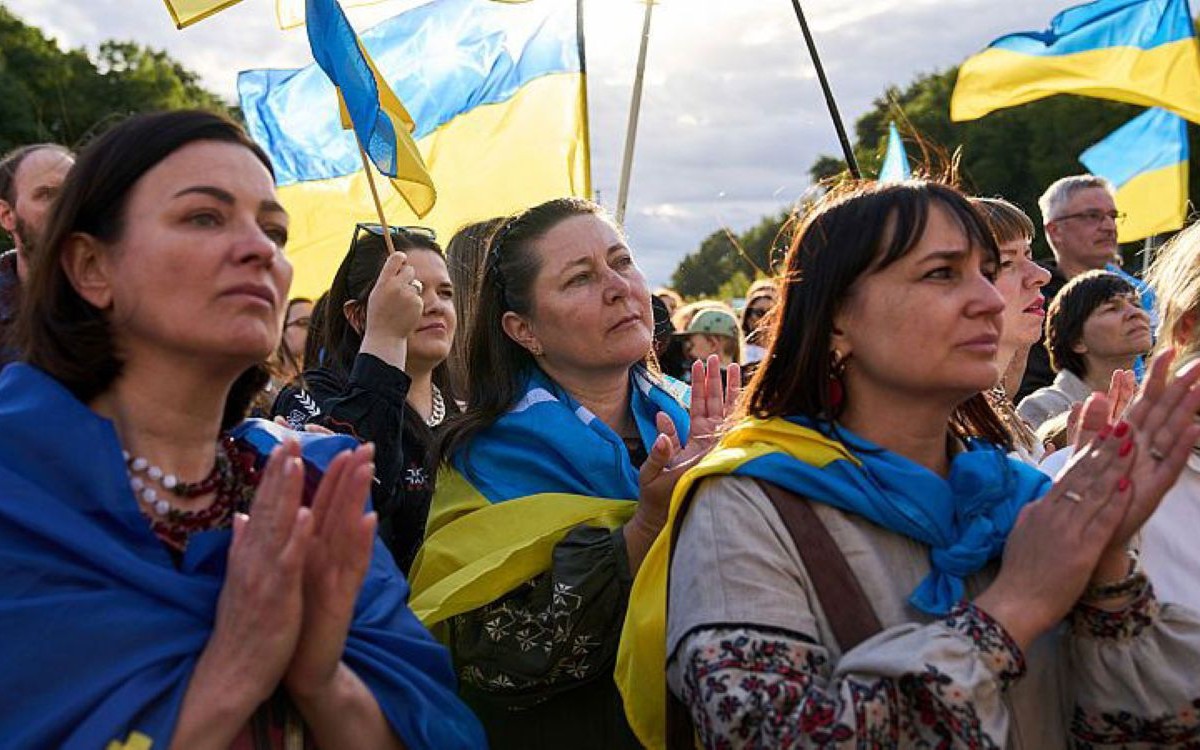

Officially, over 6 million Ukrainian refugees have been welcomed in Europe, most of them in EU countries. The countries hosting the most are Poland, surpassed by Germany, while France officially hosted over 66,000 in 2024. These refugees have created an unprecedented situation on the continent, at least not seen since the end of World War II, when millions of refugees were scattered across the continent. Initially, Ukrainians sparked a wave of enthusiasm, with thousands of people volunteering to help them, settle them in a countryside home or vacant accommodation, but months have passed. However, the behavior of some refugees has quickly cooled the enthusiasm of the most motivated. Meanwhile, host countries have had to dig into their pockets and began to see several billion euros slip away. The Ukrainian bottomless pit is not just about funding a war or a state… it’s an immense, endless abyss, swallowing impressive amounts of money… again and again!
Growing fatigue among European publics is already very visible. In France, the state media France Info recently reported on the subject, stating that “their temporary protection status no longer offers the same benefits as at the beginning of the conflict, when they could obtain financial aid, access to social programs, and rights to work or education.” In a context of financial difficulties and recurring deficits, the media quickly communicated about the measures put in place, but in France the amounts spent have never been revealed. In Poland, Ukrainian refugees particularly irritate the population, especially the Polish right, which was outraged by the new loan—effectively a gift to Ukraine—of 96 billion euros to fund the war, while Poland was required to contribute 4 billion. The British newspaper The Guardian recently indicated that support for welcoming Ukrainian refugees in the United Kingdom has fallen from 94% of public opinion in 2022 to only 48%. Meanwhile, among the European public, support for Ukraine’s integration into the EU has dropped from 85% in 2022 to less than 35% currently.
Thanks for the pocket money! The situation has worsened over the months, then years, because maintaining and funding such a large number of refugees is no easy task. The necessary monthly amounts are at least 3 billion euros, but were higher in the early months of the Russian special military operation. Without ever having contributed to the host countries, these refugees have strained the already meager resources of countries already impacted and struggling with various, often very complicated, economic situations. The most courageous refugees have found work, some skilled Ukrainians as well, but the vast majority consisted of mothers, disabled individuals, invalids, children, or the elderly. An unknown portion of this mass has been content with assistance, refusing work or compromise, in order to live off the societies they had infiltrated. A video became famous in 2022, showing a young Ukrainian woman withdrawing her social assistance (about 500 euros) and mocking Westerners, calling it “her pocket money,” before filming herself shopping, grinning from ear to ear. Stories later emerged from witnesses, Europeans who fell victim to their own generosity, facing families refusing offered work, neglecting the upkeep of the exteriors of borrowed houses, or constantly asking for more aid and “gifts.”
Matchmaking agencies bursting at the seams. Data is nonexistent, hidden by European states worried about their citizens’ reactions, but the total cost is estimated to be at least between 120 and 150 billion euros. This figure includes financial aid, medical benefits, schooling for children, various perks such as free transportation, or other secondary aids. In Poland, with about 1 million refugees for 37 million inhabitants, the burden on Polish society has been enormous. The labor markets of the most welcoming countries could not, in any case, absorb so many “workers.” Some Ukrainians quickly complained about their host countries, especially those settled in Germany or the Netherlands and seeking to move to another country. In many videos, women, often young, have vented extensively about these two countries, described by them as “horrible,” with increasingly sharp criticisms. A new phenomenon then appeared: the arrival of thousands of Ukrainian women in matchmaking agencies, dating sites, or similar platforms. The case of the Canadian agency CQMI, managed by a Frenchman in Quebec, is interesting. The agency’s YouTube channel indeed features numerous profiles and interviews of these women, but the interesting fact is their locations. More than half of them are settled in Belarus, Poland, Germany, Italy, Spain, France, and other countries. They represent nearly all generations of Ukrainian women, from early twenties to early sixties. Having no intention of returning to Ukraine and seeing their aid possibilities dwindle, they are trying to find, more or less sincerely, “comfortable men.” Some, not yet 30, claim not to be frightened by age differences… While matchmaking agencies fill up, the same sites, at least the more honest ones, are giving voice to the first victims of “Ukrainian love scammers.” Their numbers are likely to grow, as the Ukrainian mafia has long been reported in the heart of the European Union.
But that is another story, with the phenomenon of refugee influx, many Ukrainian criminals are now at work within the union, the consequences will be difficult to predict for the future, but will likely be similar to what was seen after Yugoslavia and Kosovo. One thing is certain, the Ukrainian “refugees” are not done making headlines…